When companies build their brand, they usually focus on their customers. They invest in visual identity, communication strategies, and customer experience. However, they often pay less attention to the tools employees use every day. Yet these tools have a significant impact on the way people work and on how they perceive the brand from within the organization.
Today, a Digital Asset Management (DAM) system is much more than a place to store files. It serves as a central hub where marketing teams, sales professionals, designers, and external partners access approved photos, videos, logos, and documents. For a DAM to deliver its full value across an organization, it's not enough to simply configure metadata or user permissions. Equally important is how employees embrace and adopt the system.
One surprisingly simple step that can contribute to a successful implementation is giving your DAM its own name.
A DAM Is Part of Your Brand
A company's brand doesn't end with its customers. It is also shaped internally through the tools, processes, and everyday experiences of its employees.
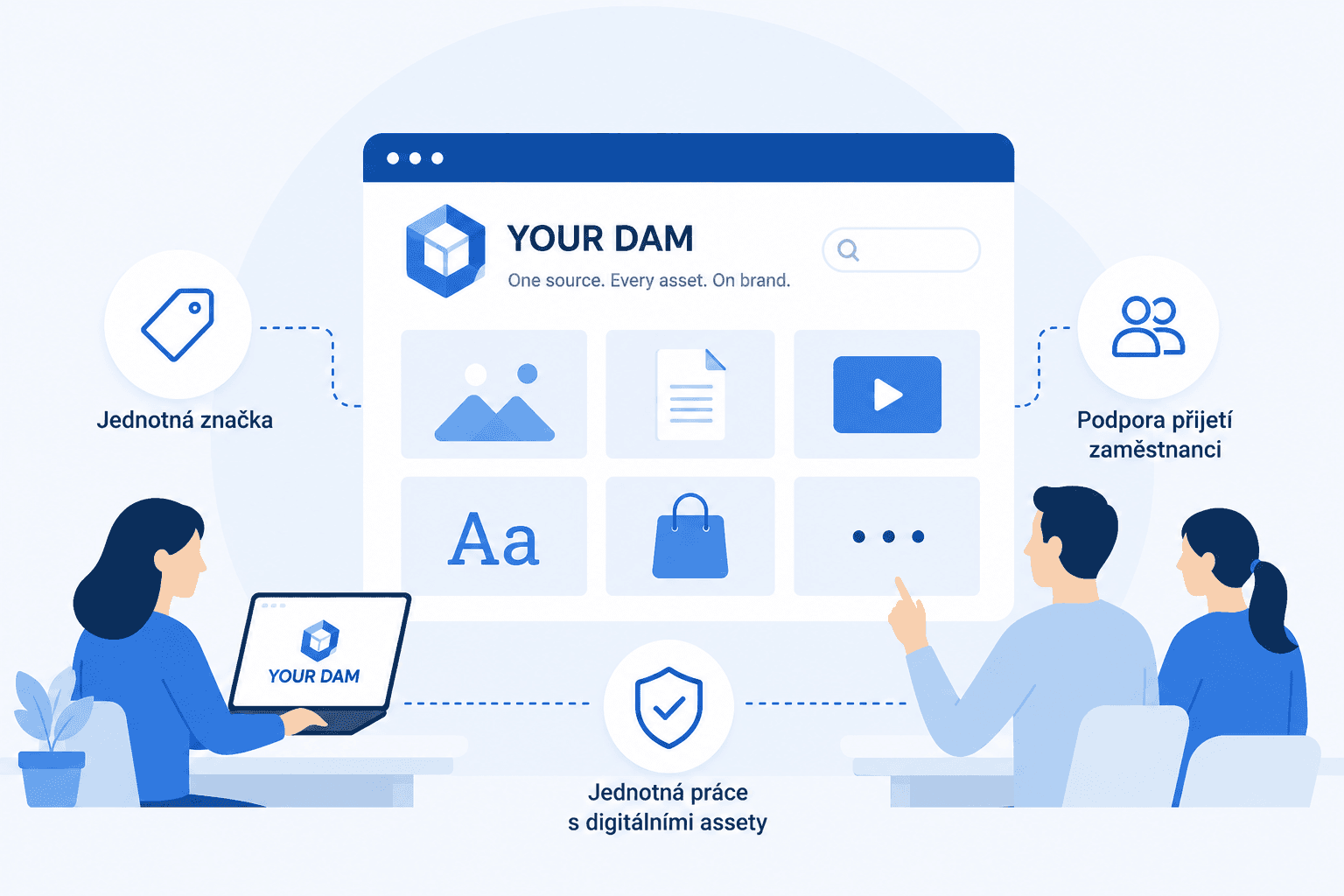
A DAM plays a unique role in this environment. It serves as the single source of truth for approved digital assets, providing different departments and external collaborators with access to the latest brand materials. If employees don't know where to find current assets—or choose to bypass the system altogether—the organization loses one of the greatest benefits a DAM is designed to provide.
Giving your DAM its own name helps establish it as a recognizable part of the company's digital ecosystem. This isn't just a cosmetic change. A named system feels like a tool with a clear purpose and a defined place within the organization, encouraging a more consistent approach to managing digital content.
Why the Way You Talk About Your DAM Matters
Every software implementation changes the way people work. Employees have to learn a new interface, adapt established routines, and understand why they should replace familiar processes with a new system.
That's why successful adoption depends on more than technical capabilities alone. The way the new solution is introduced is just as important.
Giving your DAM a distinct name can simplify internal communication, employee training, and onboarding. It creates an identity for the platform and helps integrate it into everyday workflows. Instead of being perceived as just another anonymous application, the DAM becomes a familiar part of the working environment.
Of course, naming the system alone isn't enough. But when combined with thoughtful communication and well-defined processes, it can significantly increase the likelihood that employees will actively use it.

A Name Can Improve System Adoption
When implementing a DAM, organizations typically focus on data migration, user permissions, and metadata structures. These are essential elements that determine how well the platform functions from a technical perspective.
However, focusing on the people who will use the system is just as important.
Even the most sophisticated DAM won't deliver the expected benefits if employees continue storing files on local drives, sharing assets via email, or working with outdated versions of documents. Successful implementation therefore depends on whether the platform becomes a natural part of employees' daily routines.
Naming the system is one aspect of internal branding. It helps create a clear identity around the platform and supports the adoption of new ways of working. These seemingly small details can make the transition to a new DAM feel more intuitive and approachable for everyone involved.
How BrandCloud Supports DAM Adoption
Successful digital asset management is about more than technology. It also requires creating an environment where employees can easily find what they need and where the platform fits naturally into the organization's day-to-day operations.
BrandCloud combines centralized digital asset management with a strong focus on clarity, consistency, and seamless collaboration. Marketing, sales, HR, and external partners all have access to the same approved assets in one place, significantly reducing the risk of outdated or incorrect files being used.
A successful DAM implementation goes beyond technical deployment. Organizations also need to consider how the platform is introduced internally. When employees understand why they should use the DAM and how it simplifies their daily work, it becomes an integral part of business processes rather than just another software application.
That's why it's worth thinking not only about the platform's features, but also about its identity. Giving your DAM its own name can help build a positive relationship with the new solution from the very beginning.
When a DAM Becomes Part of Company Culture
At first glance, naming a DAM may seem like a small detail. In reality, it reflects a broader approach to internal communication and brand management.
Organizations that prioritize the way employees work with digital assets usually look beyond technology. They also focus on creating clear processes, intuitive tools, and a simple, consistent experience for everyone working with branded content.
This is the point where a DAM becomes more than just a file repository. It evolves into a central hub that supports collaboration, protects brand consistency, and ensures everyone works with the most up-to-date approved assets.
Giving your DAM a name won't achieve this on its own. But it can symbolize an organization's commitment to treating digital asset management as an essential part of its company culture—not simply another item on the list of internal software applications.