
Metadata is one of the most important components of any Digital Asset Management (DAM) system. It determines how easily digital assets can be found, filtered, managed, and shared. Without well-designed metadata, even a modern DAM becomes little more than a file repository. When metadata is carefully structured and used consistently, however, stored content becomes an organized database that marketing teams, sales departments, and external partners can work with efficiently.
What Is Metadata in DAM?
Metadata is data that describes other data. In a DAM environment, it refers to information attached to each digital asset. It helps the system understand what a file contains and how it should be handled.
Imagine a photograph of a new product. The image itself contains visual information, but without metadata, the system does not know that it belongs to a spring collection, is intended for the Czech market, or has been approved for use in an advertising campaign.
Metadata may include:
- asset name,
- content description,
- product or brand,
- campaign,
- language version,
- target market,
- author,
- creation date,
- approval status,
- licensing terms,
- expiration date.
This data enables search, filtering, and process automation across the organization.
What Types of Metadata Are There?
Not all metadata serves the same purpose. For a DAM system to function properly, it is useful to distinguish between several basic categories.
Descriptive Metadata
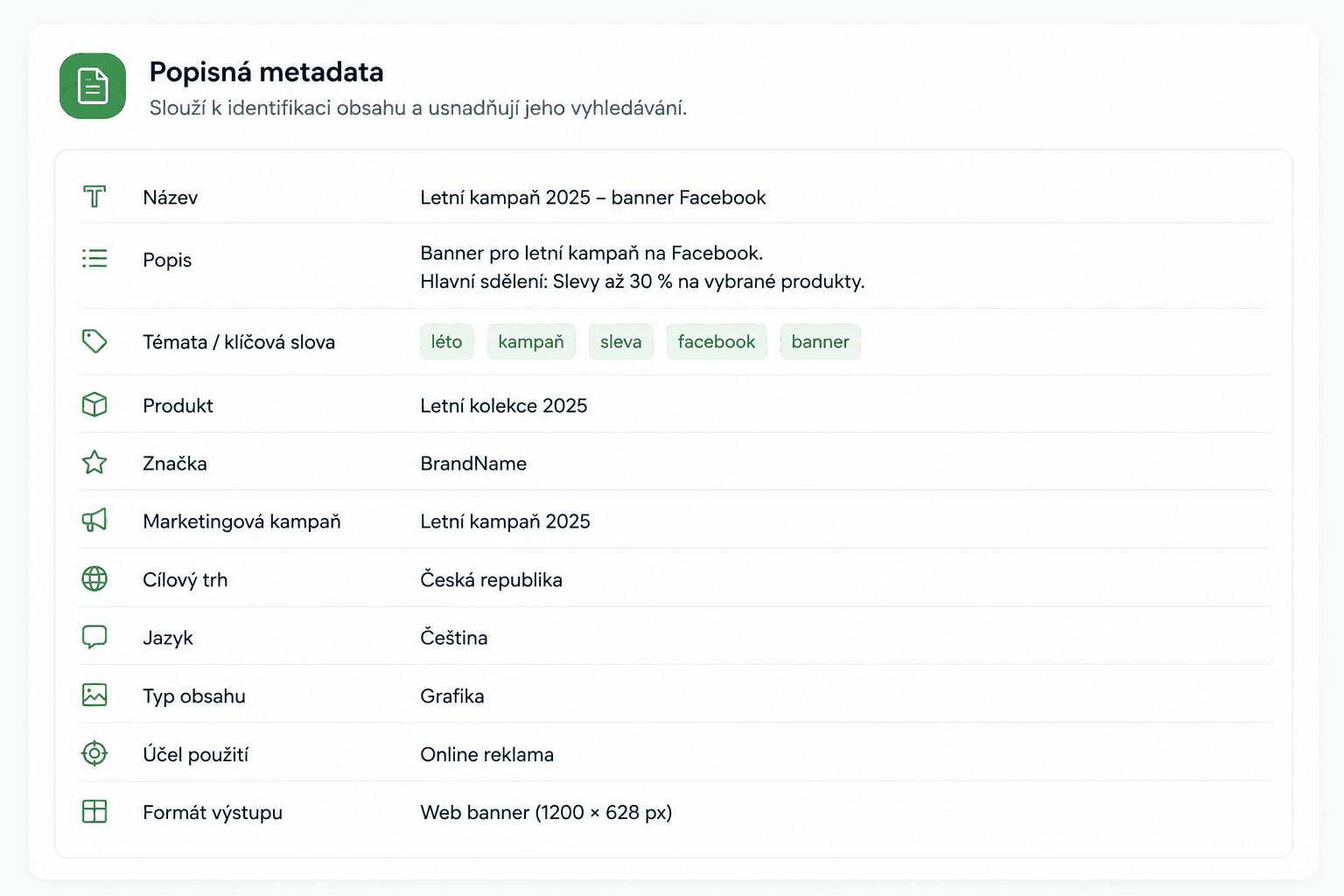
Descriptive metadata is used to identify content.
It includes information such as the title, description, relevant topics, product, brand, or marketing campaign. This is the type of metadata users rely on during everyday searches.
Technical Metadata
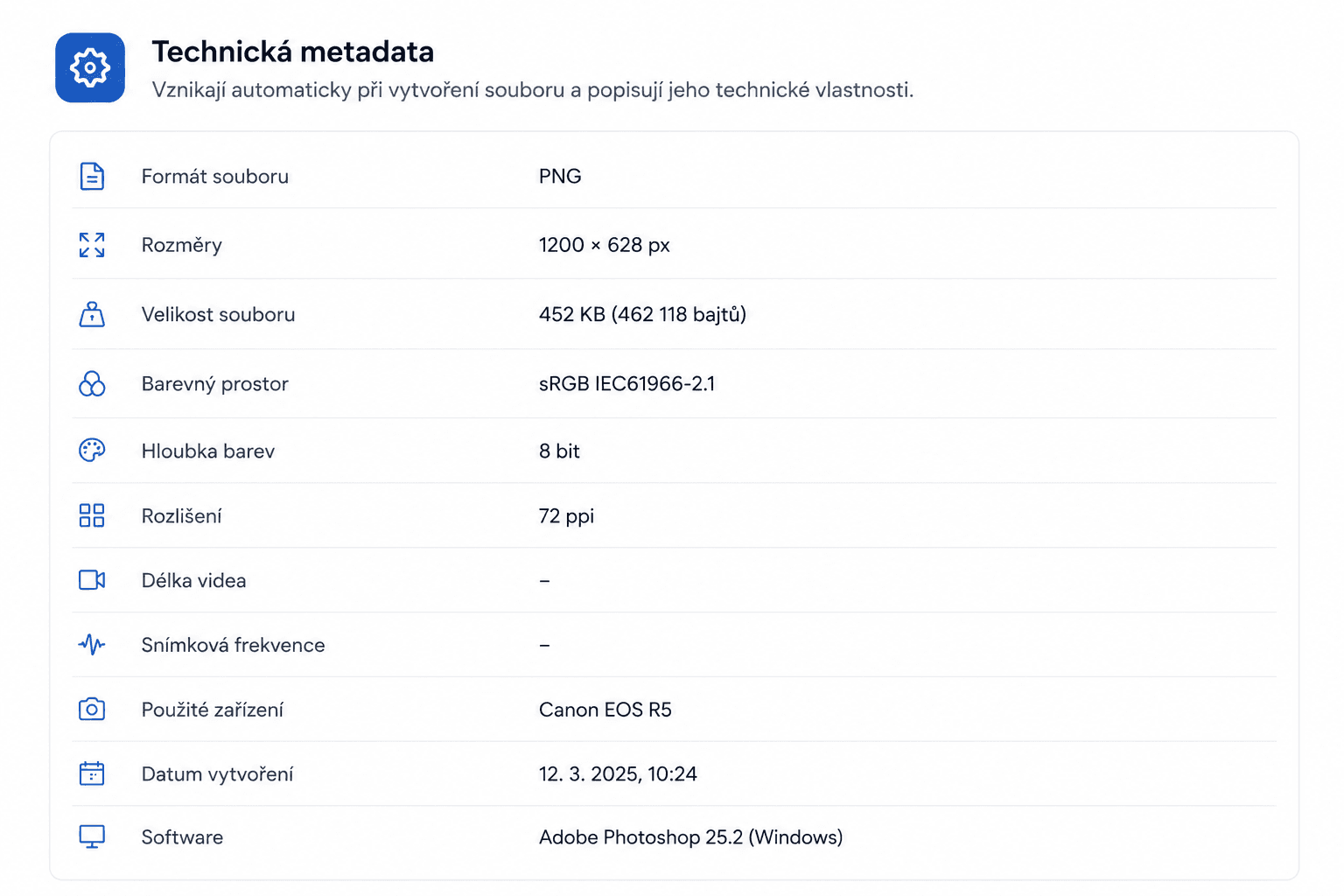
Technical metadata is usually generated automatically when a file is created.
It may include information about:
- file format,
- resolution,
- file size,
- color space,
- video duration,
- device used.
Marketing specialists often do not need to enter this information manually, but it can still be highly valuable when preparing materials for print or digital advertising.
Administrative Metadata
Administrative metadata describes how an asset is managed.
It may include information about the author, file owner, access permissions, approval process, or license. This makes it easy to verify whether a particular asset can be used.
Metadata Is Not Created Manually Only
A common misconception is that metadata involves nothing more than manually completing forms. In reality, it can be created in several different ways.
Some metadata is recorded automatically. A camera stores information about the date a photograph was taken, the lens used, or the image resolution. The DAM system can then add further technical details.
Other metadata is added by users when uploading an asset. This typically includes the product, department, language, or campaign.
Artificial intelligence is also playing an increasingly important role. It can recognize objects in images, suggest descriptions, or assign relevant tags. Human oversight, however, remains essential. AI may recognize a car, but it might not identify the specific model or understand that the image is intended only for a particular country or marketing campaign.
Metadata and Tags Are Not the Same
The terms metadata and tags are often used interchangeably, although they refer to different things.
Metadata encompasses all information about an asset. A tag is only one type of metadata.
Tags work as simple labels. They make it easy to group content quickly based on shared characteristics. For example, a photograph might include tags such as summer, outdoor, new collection, or Instagram.
Metadata is much broader. It also includes structured information that supports filtering, permission management, and workflow automation.
A well-designed DAM system therefore does not rely solely on tags. It uses a combination of different metadata types based on the organization’s needs.
How Metadata Affects Everyday Work with Digital Assets
Metadata determines how efficiently digital assets can be managed and used. It enables searches based on predefined parameters, content filtering, and the automation of numerous processes that would otherwise need to be handled manually.
In marketing practice, this means that instead of searching through folders, users simply enter a few criteria. Within seconds, they can display photographs of a particular product line, banners created for a selected campaign, or videos intended for a specific market. The same approach makes it easy to check which files have been approved or whether they can still be used under their licensing terms.
Metadata also helps maintain order throughout the entire database. It makes it possible to distinguish between working and final versions of files, manage access permissions, and automatically assign content to the correct categories. As a result, all users have access to the same up-to-date materials, reducing the risk of errors in everyday work.
How to Design Metadata That Works in the Long Term
Metadata design should reflect how an organization actually works with digital assets. The goal is not to collect as much information as possible about every file, but to create a system that is clear, easy to maintain, and supports fast and accurate searches.
A consistent metadata structure and clearly defined rules for completing individual fields are essential. If different users enter the same information in different ways, search accuracy gradually decreases. It is therefore advisable to use controlled lists of values and limit manual data entry wherever information can be added automatically.
BrandCloud makes it possible to adapt the metadata structure to an organization’s specific needs. Metadata can be linked to products, brands, campaigns, regions, and other parameters that reflect internal processes. This keeps the database organized as it grows over time and ensures that users always work with relevant content.
When designing metadata, it is worth following several basic principles:
- design metadata around how people search for content,
- use consistent terminology throughout the organization,
- limit required fields to genuinely important information,
- add metadata automatically wherever possible,
- regularly review data quality and adapt the structure as the organization evolves.