Today, digital content is created in large volumes and across an ever-widening range of channels. Brands communicate through websites, social networks, online campaigns, newsletters, printed materials, and internal materials. Each of these outputs is based on specific files—photos, videos, graphics, presentations, or documents. If these materials are not systematically managed, a confusing environment arises in which it is difficult to maintain consistent communication and effective collaboration.
Digital Asset Management is a systematic way to organize, manage, and use digital content over the long term as part of brand value. Digital asset management is no longer purely a technical issue, but has become part of strategic content management.
Digital assets as the basis for working with content
A digital asset is any file in digital form that has commercial or communication significance for an organization. These can include logos and their variants, product photos, advertising visuals, videos, presentation templates, PDF catalogs, brand manuals, or technical documentation.
These assets represent the brand and support both business and internal processes. If they are scattered across personal storage, emails, or various cloud folders, there is an increased risk of using outdated versions, disrupting visual identity, or confusion about licensing terms. Digital assets therefore require clear rules for organization, versioning, and access rights.

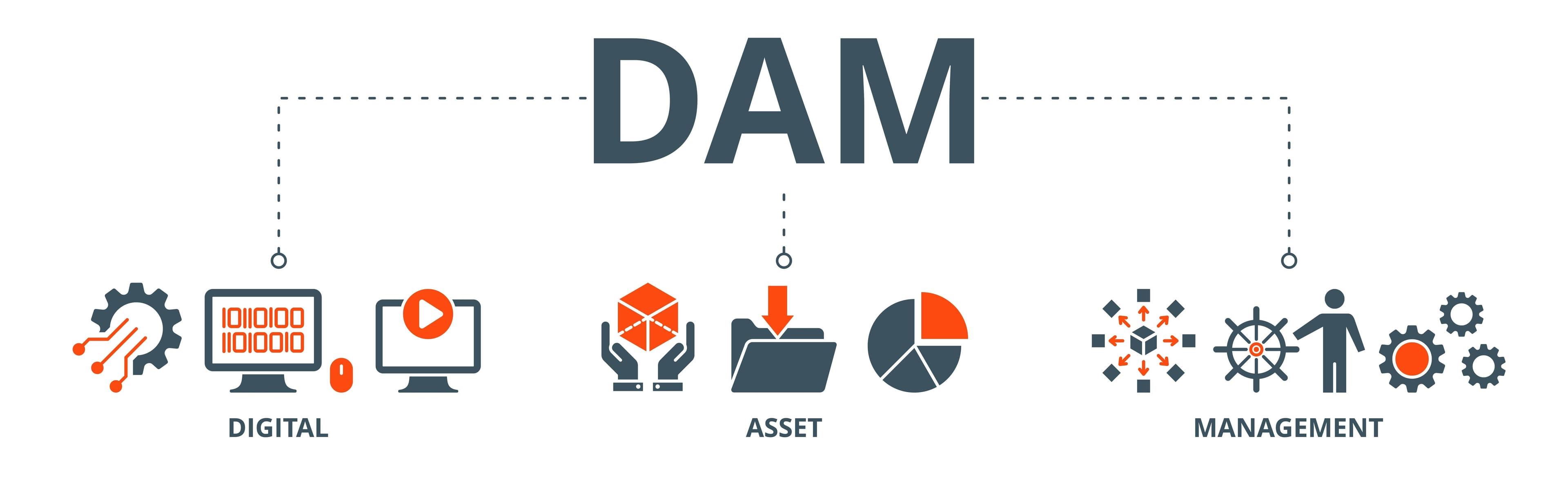
What is Digital Asset Management and how does it work?
What is Digital Asset Management in practical terms? It is software and a set of processes that enable digital assets to be stored, organized, searched, shared, and controlled in a centralized manner.
Unlike conventional storage, DAM works with metadata, i.e., additional information about files. Metadata can include campaign name, language version, target market, media type, creation date, or licensing restrictions. This makes it possible to find specific content quickly and accurately.
Modern solutions typically include version management, edit history, and user role settings. Digital Asset Management thus covers the entire content lifecycle, from creation to distribution to archiving.
Who uses Digital Asset Management
Digital Asset Management is used by organizations that work with large volumes of digital content and need to keep track of it. Typically, these are marketing departments managing campaigns and online communications, designers and creative teams working with source files, e-commerce companies managing extensive catalogs of product photos, or companies working with external agencies.
The importance of digital asset management grows with the number of communication channels, language versions, and markets. The more material is created, the greater the demands on its organization, security, and availability.
Benefits of Digital Asset Management for Brand Management
From a brand management perspective, Digital Asset Management provides an infrastructure that supports a consistent and professional presentation. A centralized library of approved materials ensures that all teams are working with the same versions of materials.
The main benefits can be summarized as follows:
- Consistent visual identity across communication channels
- Control over content versions and restriction of the use of outdated materials
- Clearly defined access rights for internal and external collaborators
- Overview of license terms and file usage history
- More effective collaboration between departments
BrandCloud allows you to centralize digital assets, set up a library structure, and manage access according to defined roles. Users can search for content according to specific parameters and share approved materials in a controlled manner. This approach supports systematic content management and brand stability.
When is the right time to implement DAM
Many companies only start considering implementing DAM when specific complications arise. Marketing is looking for the right version of a visual, the sales department is using an older presentation, and an external agency does not have access to the latest materials. In such situations, it is clear that the current method of storing files is no longer sustainable.
The right time to implement Digital Asset Management is especially when a company is growing, expanding into new markets, or experiencing a significant increase in the volume of digital content. If you work
Implementation should be linked to the setting of internal processes and responsibilities. Only the combination of technology and clear rules enables digital asset management to truly support the long-term goals of the organization.
Managed content as a prerequisite for brand stability
Digital Asset Management is part of an organization's broader digital infrastructure. In an environment where content is created continuously and at a high frequency, its systematic management is a prerequisite for long-term stability.
Companies that have their digital assets clearly organized are better able to plan campaigns, protect their visual identity, and make effective use of existing materials. Digital Asset Management thus links day-to-day operations with the long-term direction of the brand and enables content to support the organization's business goals in a structured and sustainable manner.