
Variable fonts have become a standard part of digital design in recent years. They allow designers to work with multiple font variations within a single file, providing greater flexibility when designing websites, applications, and other digital products.
Despite their growing popularity, creating variable fonts has remained the domain of experienced type designers. However, new research in artificial intelligence suggests that even this process can be partially automated. AI is beginning to handle tasks that have traditionally required manual variable font design.
Why Are Variable Fonts So Difficult to Create?
At first glance, a variable font may seem like nothing more than a combination of several font styles. In reality, the process is far more complex.
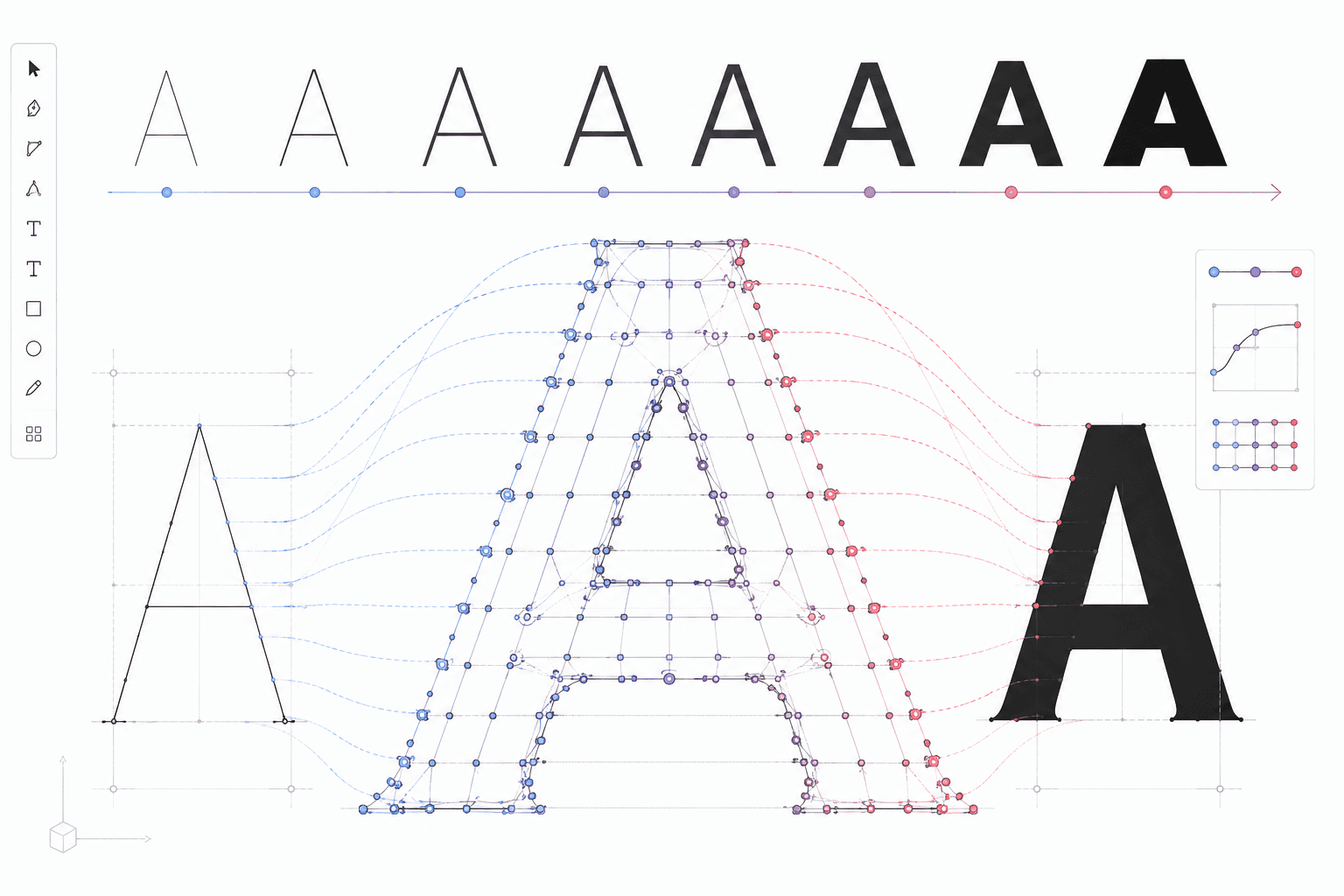
Every glyph consists of numerous vector points that define its shape. To allow smooth changes in weight, width, slant, or other parameters, designers must carefully define how each part of a character behaves throughout every stage of that transformation.
In other words, designing a variable font is not simply about creating a few font styles. It involves building an entire system of rules that governs how characters change across multiple axes and combinations of axes.
When creating a variable font, designers need to ensure:
- consistent stroke weight changes,
- preservation of character proportions,
- readability at different sizes,
- smooth transitions between variations,
- proper interaction of multiple axes at the same time.
The last point is often one of the most challenging. Adjusting width can affect character proportions, while increasing weight may impact readability or the internal spacing of letters. Every modification influences other aspects of the design.
It is therefore no surprise that many well-known typefaces still exist only as static fonts. Creating a high-quality variable font requires significant time, expertise, and meticulous manual work.
How AI Is Entering Typography
This is where artificial intelligence comes into play.
New AI models are learning to recognize relationships between different font variations and predict how characters should change when specific parameters are adjusted. Rather than working with images of letters, these systems operate directly on the vector structure of the glyphs.
The result is not a visual concept or a rendered preview, but a functional variable font that can be used in digital environments just like a font created through traditional methods.
Although these technologies are still primarily in the research stage, they point to a future direction for typography and font production.
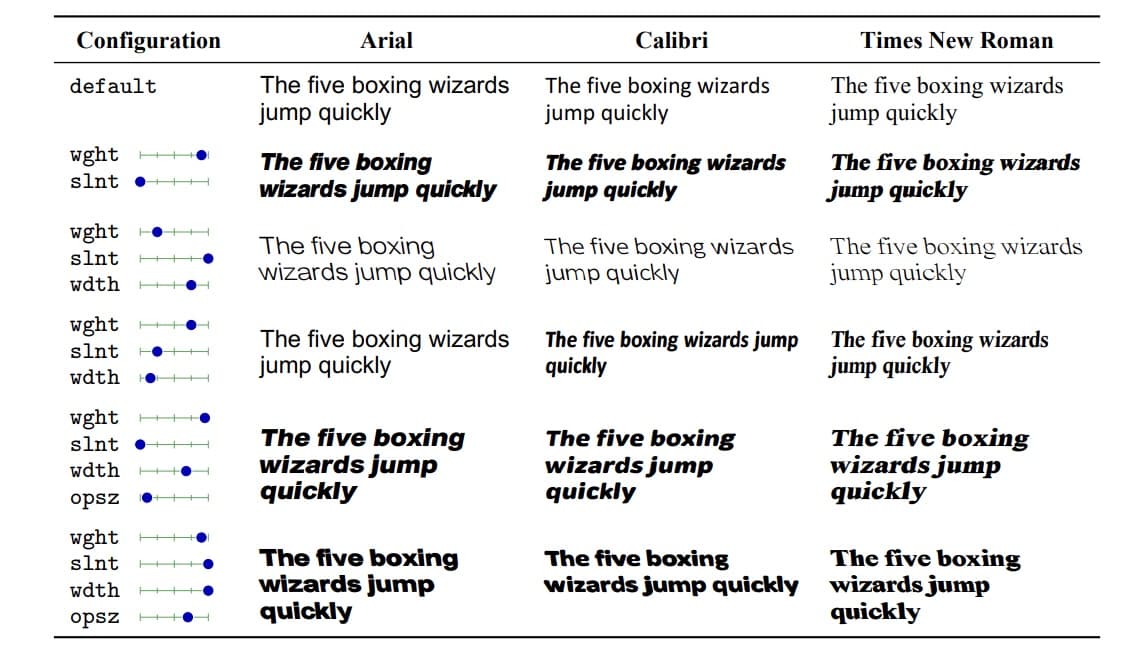
Source: Benedek – NIV (2026)
What Does This Mean for Brands?
If similar tools become part of mainstream design software, it could become much easier to expand existing typographic systems or convert older typefaces into variable fonts.
For brands, this would mean greater flexibility when working with typography across websites, applications, and other digital channels. It could also accelerate the development of design systems and large-scale visual identities.
Variable fonts also help reduce the number of font files and simplify the management of typographic assets. This becomes particularly important when multiple teams or external partners work with the same brand identity.
Typography Enters a New Phase
Artificial intelligence is already transforming the creation of text, images, and video. Typography has long been considered an area where automation would progress much more slowly.
Current developments suggest otherwise. AI is not replacing type designers, but it is beginning to assist with technically demanding tasks that have traditionally relied on extensive manual work.
As digital identities become increasingly important, so does the need for effective management of all brand assets. BrandCloud enables centralized management of digital assets, including typographic resources, ensuring that teams work with up-to-date versions and maintain brand consistency across all channels.
Variable fonts are now a common part of modern digital design. And all signs suggest that their creation will become faster, more accessible, and increasingly supported by artificial intelligence in the years ahead.