Many of Figma’s latest features focus on challenges that most creative and marketing teams face every day: how to produce more content in less time, reduce repetitive tasks, and maintain brand consistency across different formats and channels.
We took a closer look at several updates that may be valuable not only for designers, but also for marketers and digital asset managers.
Bulk Editing in Figma Buzz
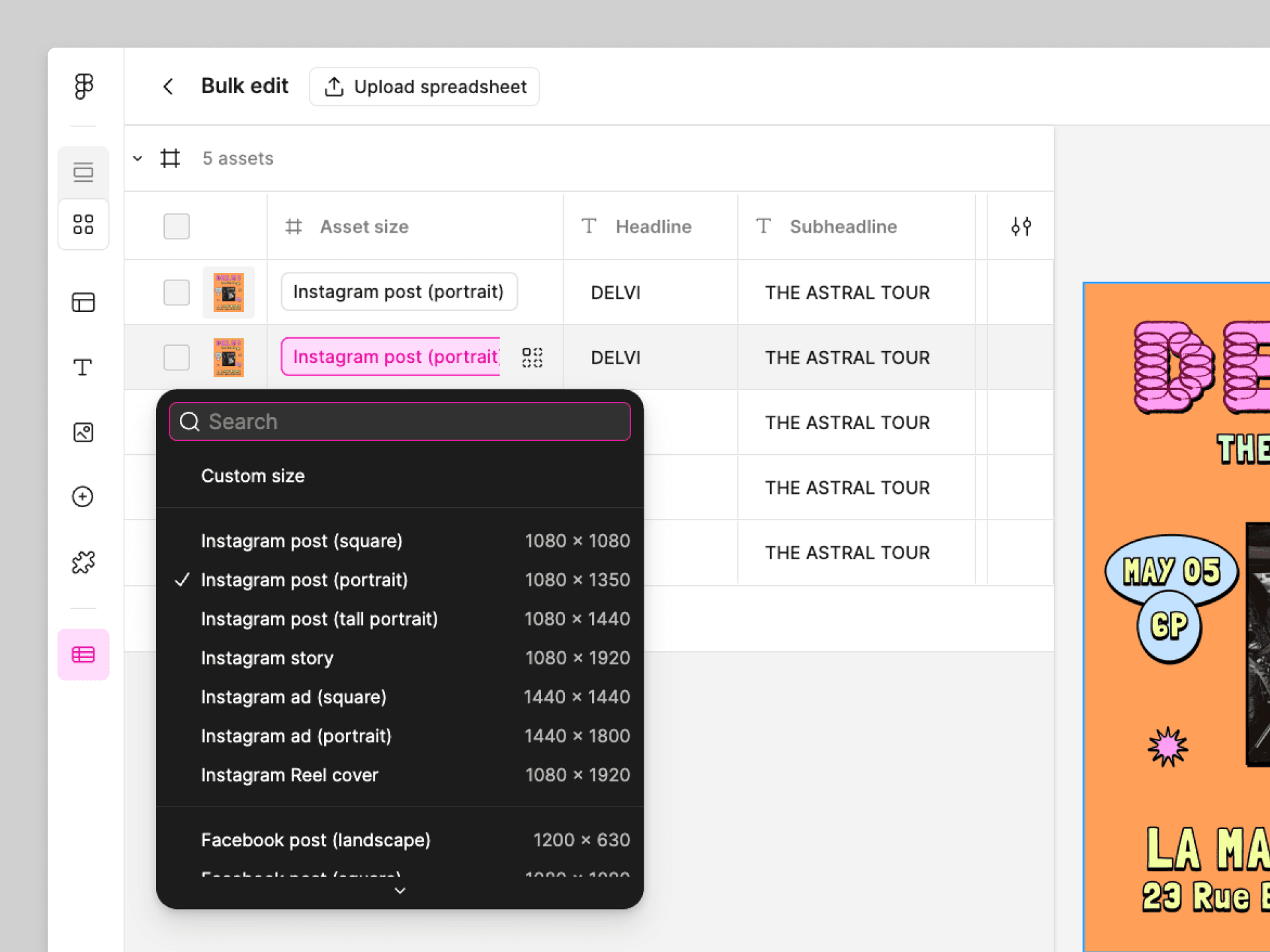
One of the most practical additions is the expansion of bulk editing capabilities in Figma Buzz. Users can now upload data from spreadsheets and create or update large numbers of marketing assets at once.
Teams can make bulk changes to text, images, and other content elements across dozens or even hundreds of outputs. The feature also makes it possible to automatically generate different formats for various marketing channels. Instead of creating each variation manually, entire sets of assets can be produced in just a few steps.
This type of functionality is particularly valuable for brands running localized campaigns, managing large product portfolios, or regularly creating content for multiple markets.
Source: Figma
AI Gains Access to Real-Time Information
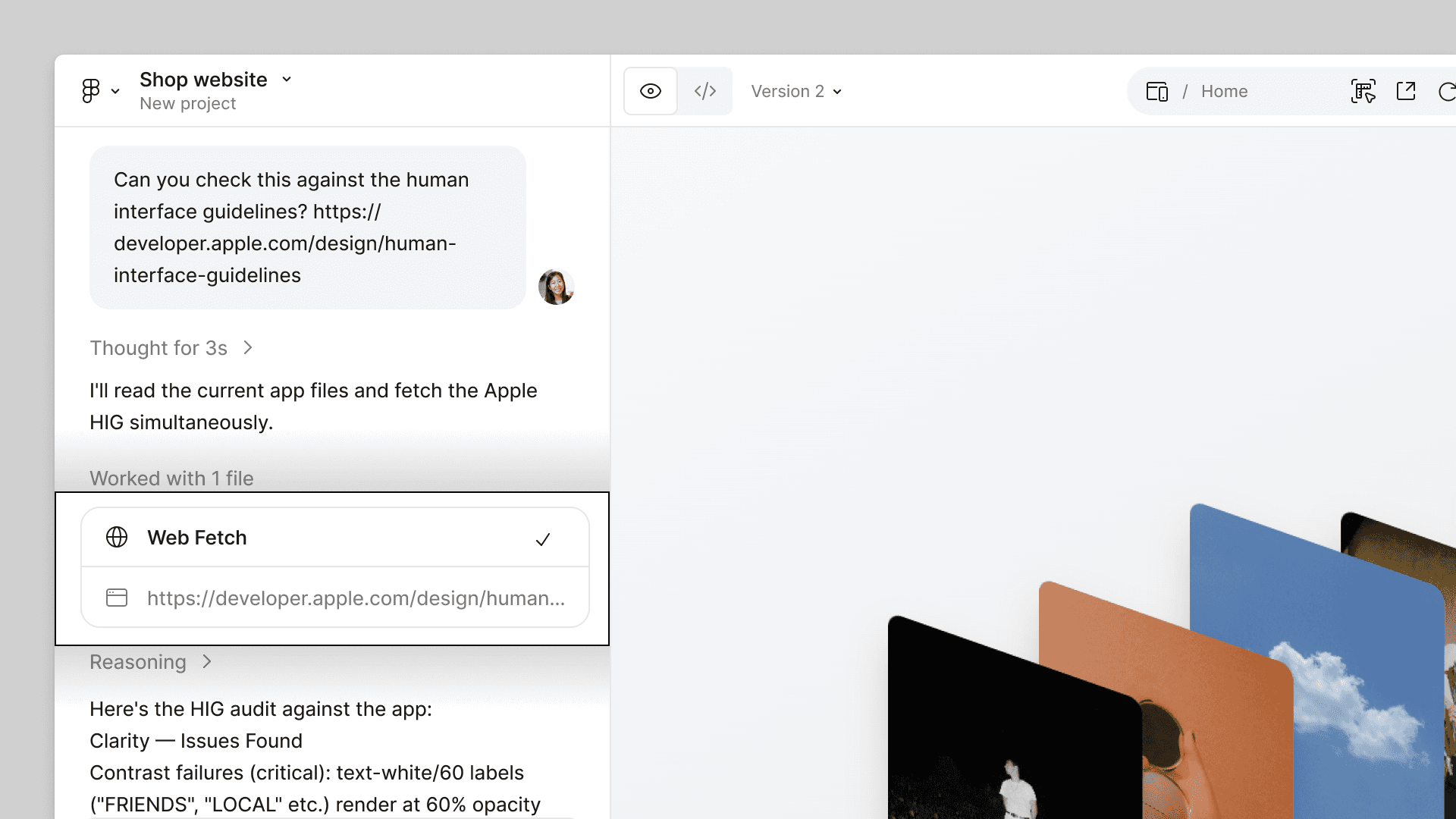
Another noteworthy addition is Web Search within the Figma Design Agent. AI can now access up-to-date information from the web directly during the design process. This allows creators to work with real-world content instead of placeholder text without constantly switching between Figma and a browser.
With this feature, Figma moves AI beyond the role of a simple assistant and closer to a tool that can work with context and support decision-making throughout the design process.
Source: Figma
Keeping Designs Aligned with Your Design System
Another feature worth highlighting is Check Designs. It compares designs against an organization’s design system and flags inconsistencies.
It can identify issues such as:
- incorrectly applied colors,
- detached components,
- inconsistent styles,
- accessibility issues.
The tool also provides suggested fixes that can be applied with a single click. For larger organizations, this represents an important step toward stronger brand governance and higher-quality outputs.
Greater Control Over Content Publishing
Recent updates also affect Figma Sites and Figma Make. Administrators can now define publishing rules at the workspace level, making it easier to control who can publish websites and other outputs and who requires approval before doing so.
For organizations working with sensitive content or more complex approval workflows, this is a significant improvement. Access management is becoming just as important as content creation itself.
What These Updates Mean for Brand Management
Taken together, these updates reveal a clear direction. Figma is increasingly focused on supporting work at scale. The platform is no longer concerned solely with design creation, but also with content management, quality control, automation, and cross-team collaboration.
As the volume of assets grows, so does the need for effective organization. Templates, design systems, and approved marketing materials all require a clearly defined source of truth that is accessible to everyone working with the brand.
BrandCloud provides centralized digital asset management, version control, and distribution of approved content across the organization. Connecting creative tools with a well-structured content management process helps brands maintain consistency even as content production continues to grow.
Focusing on the Process, Not Just the Design
The most interesting aspect of these updates is not any single feature, but the overall direction they represent. Figma is increasingly bringing design, content creation, automation, publishing, and quality control together in one environment.
For marketing teams and brand managers, this means less manual work, faster production, and greater confidence that all outputs align with established brand standards. As the volume of digital content continues to increase, these capabilities will become increasingly important.