Content migration to a Digital Asset Management (DAM) system is often one of the most important steps when implementing or modernizing digital asset management. However, it involves much more than simply moving files from one storage location to another. A well-planned migration provides an opportunity to organize digital content, standardize the way it is managed, and create an environment where all important assets are easy to find, up to date, and ready for everyday use.
What Is Content Migration to a DAM?
Content migration to a DAM refers to the process of transferring digital assets into a Digital Asset Management system. It is not limited to moving files from one repository to another. Metadata, folder structures, and user permissions are often migrated alongside the assets themselves.
The goal of a migration is to create an environment where content is easy to access, well organized, and ready to support day-to-day operations.
A migration may include content stored in:
- network drives,
- cloud storage platforms,
- internal servers,
- another DAM system.
Every organization approaches migration differently. The scope of the project depends on the volume of digital assets, the way they are currently managed, and the needs of individual teams.
For this reason, migration should not be viewed as a one-time technical task. Instead, it is an opportunity to establish a digital asset management framework that supports both daily operations and future business growth.
Why Companies Migrate to a New DAM System
In most cases, content migration is not triggered by a single issue. Instead, organizations gradually realize that their existing approach to managing digital assets is no longer efficient.
The most common reasons include:
- a rapidly growing volume of digital assets,
- an unstructured file organization,
- duplicate or outdated file versions,
- increasingly complex collaboration across teams,
- the need to integrate the DAM with other business systems,
- the transition to a more modern solution.
Migration may also be driven by a rebrand, a merger or acquisition, expansion into new markets, or changes to internal workflows. In these situations, organizations often find that their existing system can no longer support efficient content management.
Migration is therefore not an end in itself. Its purpose is to create an environment where digital assets are better organized, easier to find, and readily available across the entire organization.
Benefits of Content Migration to a DAM
A well-planned migration can significantly improve the way organizations work with digital content. Many of the benefits become apparent as soon as all assets are centralized in a single location.
One of the biggest advantages is faster content discovery. A clear structure combined with well-defined metadata allows employees to locate the right files quickly without searching through countless folders or verifying which version is the most recent.
Migration also provides an opportunity to eliminate unnecessary content. Organizations often discover duplicate files, outdated documents, or assets that are no longer relevant.
The main benefits include:
- centralized digital asset management,
- faster content search,
- improved version control,
- consistent metadata and folder structures,
- easier collaboration across teams,
- stronger security and better access control.
Another significant advantage is the ability to integrate the DAM with other business systems. This allows digital assets to be used seamlessly across marketing, e-commerce, product management, and sales without maintaining multiple copies of the same content.
How to Prepare for Content Migration to a DAM
A successful migration begins long before any data is transferred. Proper preparation and a clear understanding of how the new system should function are essential.
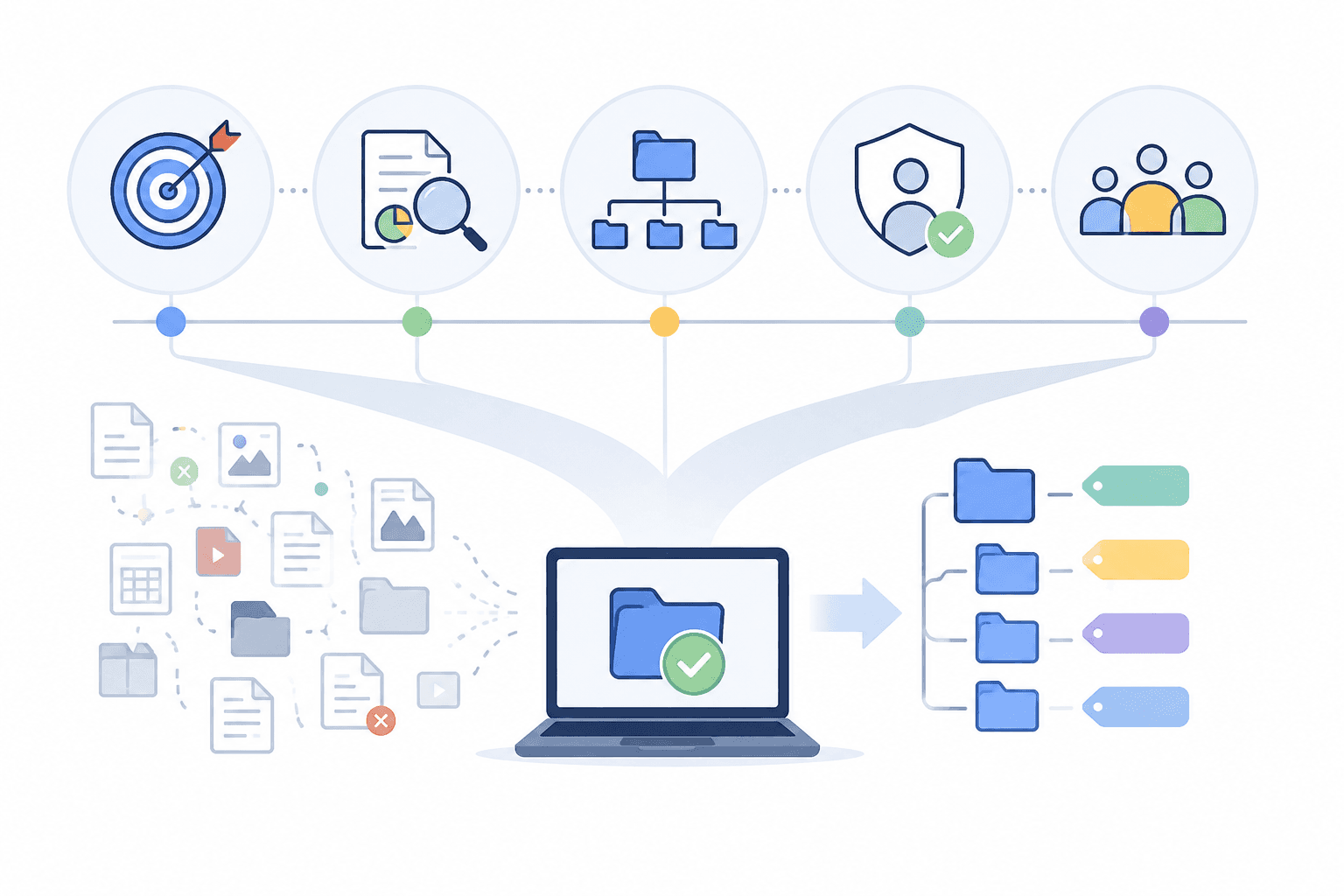
The first step is to review your existing content. This helps identify duplicate files, outdated assets, and materials that are no longer needed. Migrating everything without first evaluating its quality often means carrying existing problems into the new system.
It is equally important to design the future content structure. A well-planned taxonomy, metadata model, and file naming conventions will make content easier to manage and search for years to come.
Before starting the migration, organizations should focus on:
- defining migration objectives,
- evaluating the quality and relevance of existing content,
- designing folder structures and metadata,
- reviewing user permissions,
- understanding the needs of different teams.
The better the preparation, the smoother both the migration process and the long-term adoption of the new DAM system.
How BrandCloud Supports Content Migration
Migration is only the beginning. Equally important is how digital assets are managed after the migration is complete.
BrandCloud provides a centralized environment for managing digital assets. Users benefit from advanced search capabilities, metadata management, file versioning, and granular access control. This ensures that content remains easy to find and that every team works with the latest approved assets.
The platform also supports integration with other business systems, enabling digital assets to move seamlessly between the tools organizations use to create, manage, and publish content.
A well-designed DAM system delivers value far beyond the migration itself. It helps organizations keep their digital content organized, current, and ready for use long into the future.
Migration as the Foundation of Effective Digital Asset Management
Content migration to a DAM is much more than a technical project. It is an opportunity to establish a unified environment for managing digital assets while eliminating inefficiencies that have accumulated over time.
When properly planned, migration leads to more organized content, better collaboration, and greater control over digital assets. That is why it should be viewed as a long-term investment in the organization's future rather than simply a one-time file transfer.