The terms DAM and BAM are often confused. At first glance, both systems appear to address a similar area — working with digital content and branded materials. In reality, however, they represent two different approaches to managing corporate communication.
While DAM focuses on organizing digital assets, BAM addresses the broader issue of brand consistency, communication guidelines, and control over how individual materials are used. The difference between these systems becomes more noticeable especially when a brand communicates across multiple channels, teams, or external collaborators.
This is where it becomes clear where DAM ends and BAM begins.
What is DAM
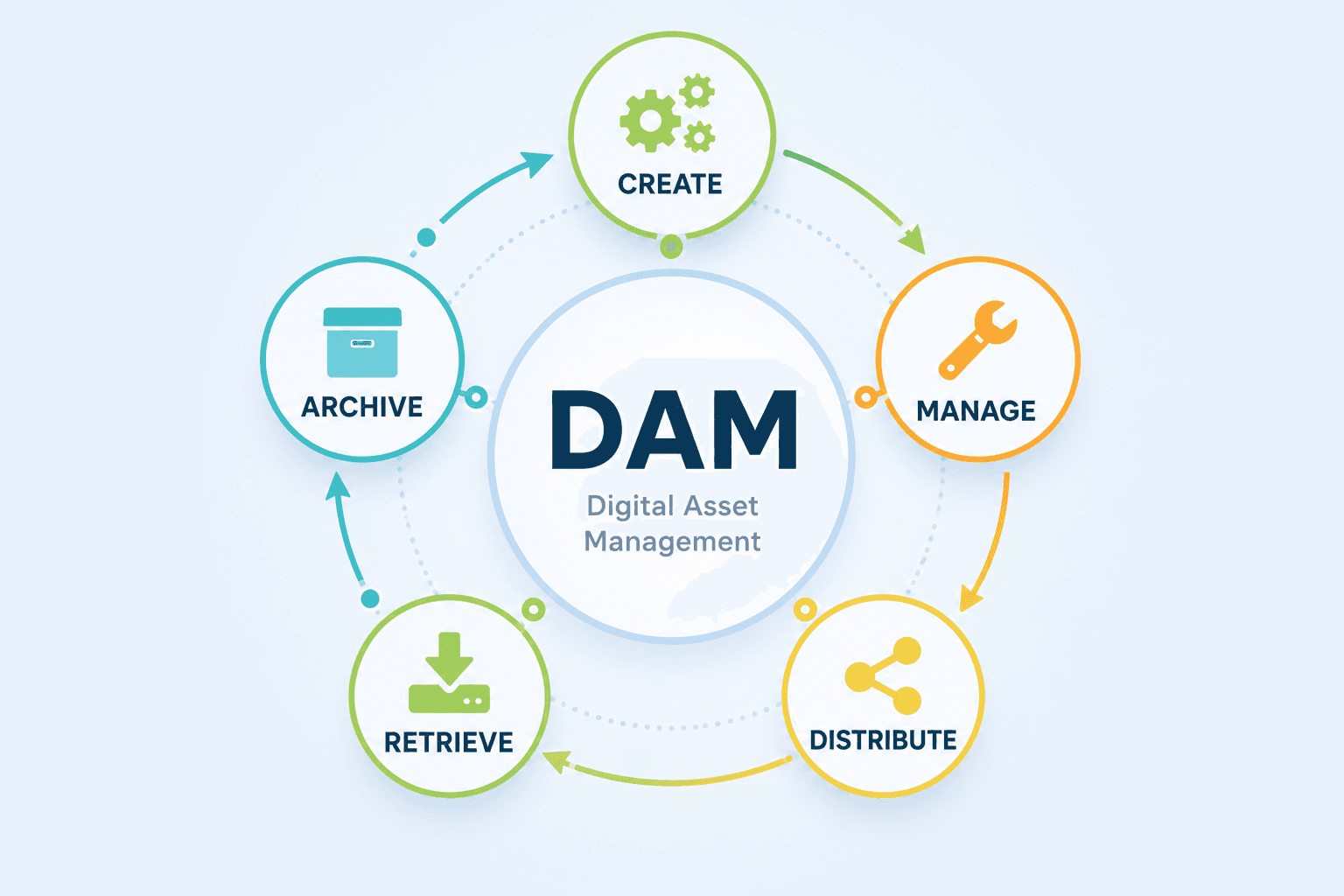
Digital Asset Management refers to a system designed to manage digital assets such as logos, photographs, banners, videos, presentations, or PDF documents.
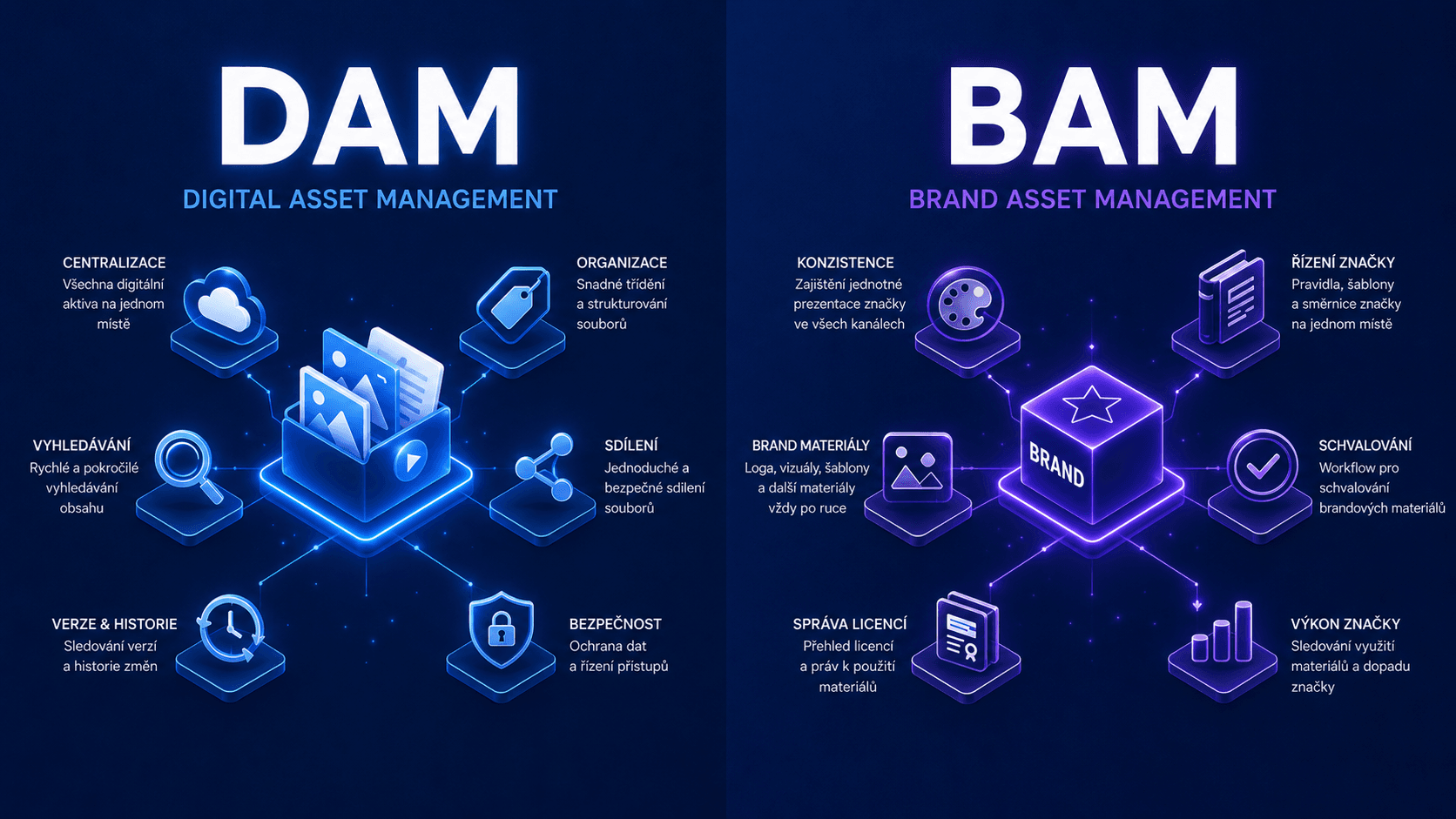
The purpose of a DAM system is to centralize content, organize it efficiently, and simplify sharing between users or teams. Features often include file versioning, access rights management, and fast retrieval of specific materials.
DAM helps companies maintain order in their digital assets and work with up-to-date versions of content.
In other words — DAM focuses on the files themselves.
What is BAM
Brand Asset Management represents a broader approach focused on managing the brand itself and maintaining its consistency. It does not deal only with storing files, but also with the way individual assets are used in communication.
BAM often includes:
- visual identity guidelines,
- management of approved templates,
- logo usage control,
- tone of voice management,
- online brand manuals.
While DAM primarily addresses the content itself, BAM focuses on its relationship to the brand and on maintaining consistent communication.
Assets may be organized correctly, while communication can still appear inconsistent.
And this is exactly where the difference between DAM and BAM becomes highly visible.
Where DAM Ends and BAM Begins
The boundary between DAM and BAM is not always completely separated. Both systems are closely connected, and some of their functionalities overlap. Even so, there is a fundamental difference in the principle behind how they operate.
DAM addresses the availability, organization, and distribution of digital assets. It focuses on efficient content management and its use across the company or marketing teams.
BAM, on the other hand, works with the broader context of the brand. The emphasis is placed on whether communication follows established guidelines, whether the correct visual elements are being used, and whether the brand appears consistent across all channels.
It is therefore not only about file management.
It is about managing the brand itself.
When digital asset management is separated from brand management, inconsistent communication, the use of different material versions, or disruptions to visual identity often occur.
This is why BAM is increasingly being perceived as a natural extension of DAM systems.
How BrandCloud Fits Into This Approach
BrandCloud makes it possible to connect digital asset management with brand management within a single environment. In addition to organizing and distributing assets, the platform can also include an online brand manual, version control of materials, and user access management.
The emphasis is placed on content centralization while simultaneously maintaining consistent brand communication across teams and channels.
As a result, digital assets can be managed more systematically while reducing the use of outdated or unapproved materials.
Asset management and brand management can therefore work together.
What to Take Away From This
The difference between DAM and BAM is not only about technology, but primarily about the overall approach to managing digital communication. DAM focuses on organizing and managing assets, while BAM addresses brand consistency and control over how the brand is used.
Brand management is no longer a separate discipline existing outside of asset management. Both areas are becoming increasingly interconnected and together form the foundation for consistent and sustainable brand communication.
As a result, it is becoming increasingly important not only where company assets are stored, but also how they are used.