
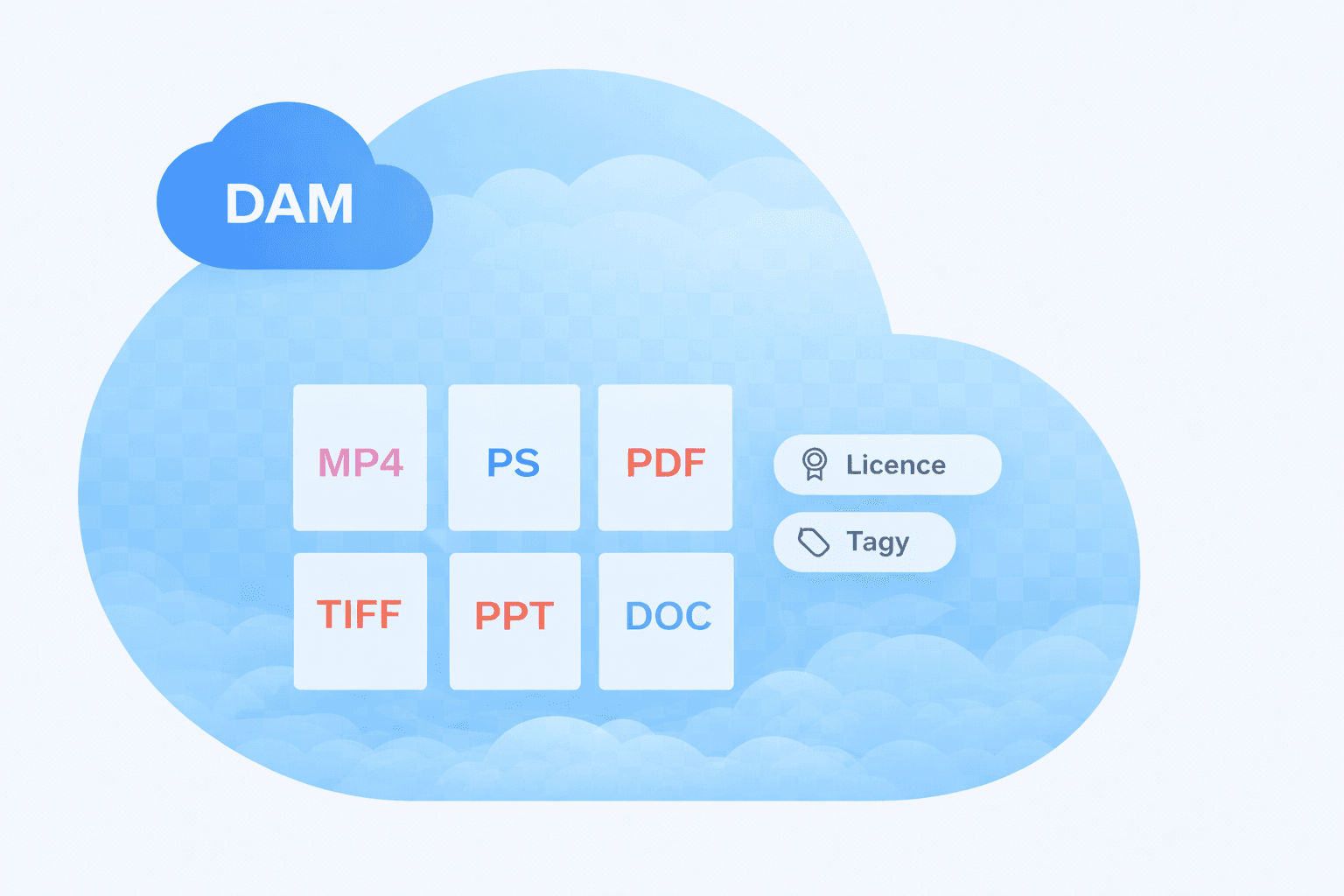
Digital asset management (DAM) is now considered a fundamental tool for working with content and managing a brand. The topic is explored in more detail in the article Digital asset management as a tool for brand and content management, which this text loosely builds upon.
In an environment where the volume of digital content continues to grow and brands communicate across multiple channels, the approach to managing content is undergoing a significant transformation. DAM is no longer seen merely as a place to store files, but as a tool that helps organize, manage, and efficiently use content in everyday practice.
In recent years, a range of trends has emerged that point to the direction this field is heading. These changes are reflected in how brands work with content, how quickly they respond to new situations, and how they maintain consistent communication.
From storage to active content management
The way organizations work with digital assets has changed considerably. DAM no longer serves only as a central repository but as an environment where content is actively managed and utilized.
An important part of this shift is the use of metadata, meaning additional information that describes individual files. Thanks to metadata, content can be efficiently organized, searched, and reused without unnecessary delays. Users are no longer dependent on file names or complex folder structures but can work with content based on its meaning and context.
At the same time, DAM is increasingly integrated with other tools. It connects with content management systems, marketing platforms, and e-commerce solutions. Content is no longer isolated but becomes part of a broader ecosystem where it can flow seamlessly between processes.
Automation and artificial intelligence in everyday use
As the volume of digital assets grows, so do the demands placed on their management. Manual sorting, tagging, and searching would in many cases become time-consuming and inefficient.
This is why automation and artificial intelligence are being used more frequently. These technologies can recognize image content, automatically assign tags, and suggest related assets. As a result, users can search for content more intuitively, without needing to know exact file names.
Automation is also applied to workflows. Approval processes, publishing, and distribution can follow predefined rules, which increases clarity and reduces the likelihood of errors.
Brand consistency across digital channels
With the growing number of communication channels, maintaining a consistent visual and content style becomes more demanding. Each channel has its specifics, yet all should form a cohesive brand image.
DAM supports this by ensuring access to up-to-date and approved assets. Users can work with the correct versions of logos, visuals, and templates, reducing the risk of inconsistencies. At the same time, usage guidelines can be defined to maintain consistency across teams and external collaborators.
Brandcloud extends this approach by enabling structured management of brand assets. It supports not only storage but also controlled sharing and oversight of how brand elements are used in different contexts.
Personalization and tailored content
Brands are increasingly focusing on adapting content to specific audiences. Content is adjusted based on market, target group, or campaign context.
This creates a need to manage a larger number of asset variations. DAM systems therefore offer tools for filtering, categorizing, and combining content according to current needs. Users can quickly assemble a set of assets tailored to a specific use case.
At the same time, personalization increases the demand for clarity. Without structured management, it would be difficult to maintain control over existing variations and their usage.
Collaboration and accessibility in a digital environment
More teams are now involved in content creation and distribution than ever before. Marketing, design, sales, and external agencies all need to share and work with assets in real time.
DAM serves as a shared workspace that enables file sharing, version control, commenting, and access management. Each user can access relevant materials while working with up-to-date versions.
Cloud-based solutions further enhance accessibility, allowing content to be accessed from anywhere. This aligns with modern work environments, where teams often operate remotely or in hybrid setups.

How these trends shape everyday practice
Current developments show that digital asset management is becoming an integral part of working with content and brand management. It is not just a technological solution but a shift in how organizations approach their digital assets.
In practice, this means a stronger focus on clarity, efficient processes, and the ability to respond quickly to change. Organizations with well-structured and easily accessible content can prepare campaigns more efficiently and maintain consistent communication.
At the same time, it becomes clear that the tool itself is not enough. Equally important are well-defined processes, effective use of metadata, and the involvement of people who work with content on a daily basis. It is in this combination that the full potential of solutions like Brandcloud becomes evident, supporting both content organization and its systematic use in everyday work.
Digital asset management thus represents a stable foundation for working with digital content in an ever-evolving environment. As the volume of data and the number of communication channels continue to grow, its importance will further increase and shape how brands operate in the digital space.