Visual identity has long been built on static elements. Logo, color palette, and typography formed the foundation that was then applied across different outputs. With the gradual shift of communication into the digital environment, however, this approach is proving insufficient. Brands now operate in a space defined by constant interaction, change, and movement.
Motion is no longer optional. It is expected.
Motion design is therefore no longer an add-on but a natural part of visual communication. It is not only about aesthetic enhancement, but about how a brand is perceived over time. This time-based dimension fundamentally affects both the clarity of the message and the overall user experience.
What motion design is and how it expands traditional design
Motion design represents the intersection of graphic design and animation. Its essence does not lie in movement itself, but in the meaning that movement carries within communication. Visual elements are no longer perceived as static objects, but as part of a process unfolding over time.
In digital environments, this approach is most visible in user interfaces. Transitions between states, responses to interaction, and the way content loads all contribute to user orientation and help structure information. Movement serves both a navigational and informational function.
From the perspective of visual identity design, this means an expansion of the traditional framework. In addition to shape, color, and typography, it becomes necessary to define dynamics—how elements behave during transitions or interactions.
This is a shift in principle, not just an extension of tools.

Source: School of motion
The transformation of brand communication in digital environments
As digital channels gain importance, the way brands communicate is also changing. Static formats are increasingly complemented by dynamic elements that allow for better management of user attention and improve message comprehension.
Animation is now commonly used in user interfaces, websites, and digital campaigns. Its function is not limited to attracting attention, but primarily to structuring content and supporting navigation. Smooth transitions between sections or subtle interaction feedback help users understand the environment without additional explanation.
User expectations have also shifted. Dynamic behavior is perceived as a standard. A static interface may feel incomplete or less intuitive, even if it is visually well designed.
Motion design in the Czech context
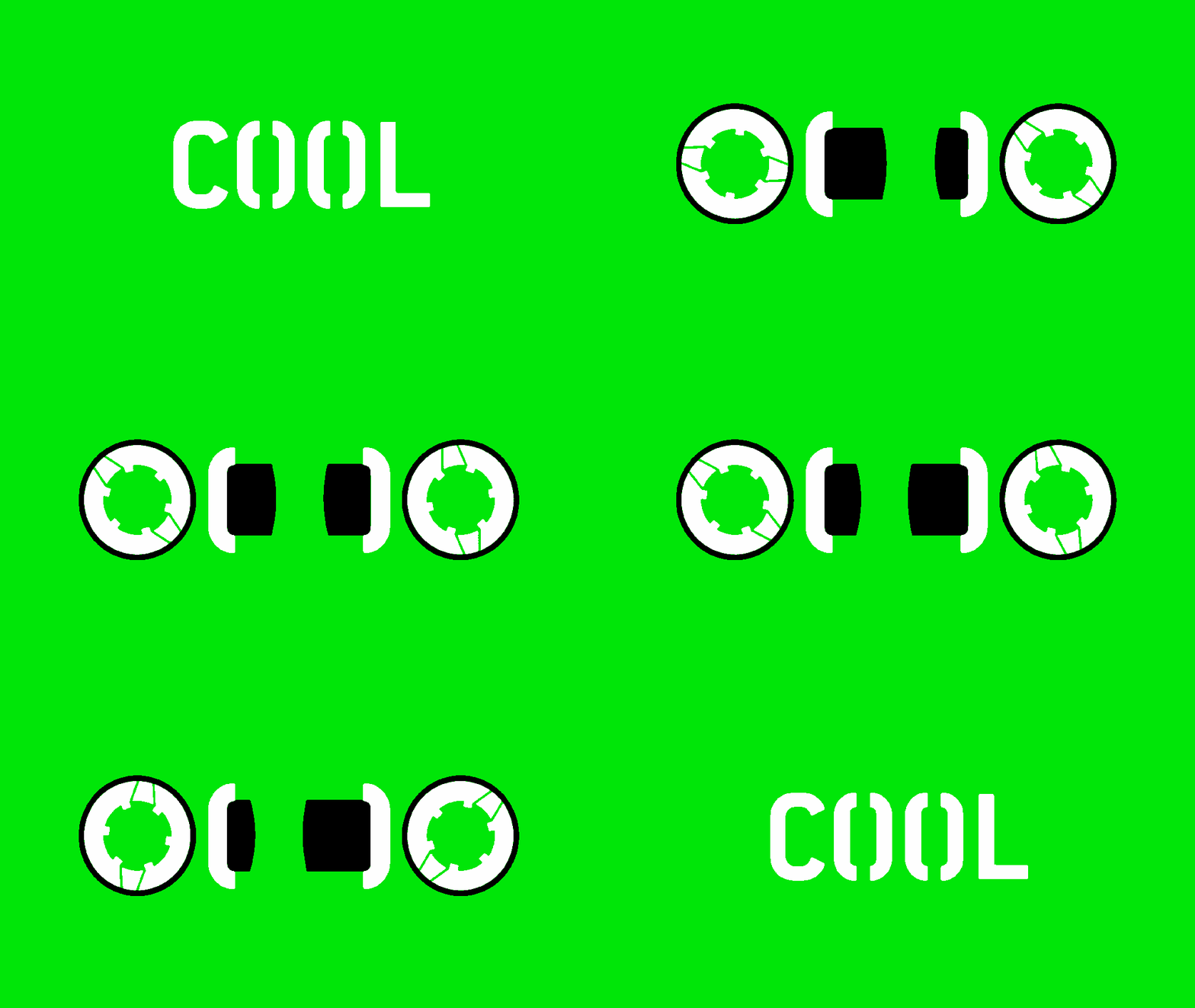
Motion design has established a strong position within the Czech creative environment, where a growing community of studios and creators is taking shape. One of the prominent players is Oficina, a studio responsible for a number of well-known television identities, including Prima COOL. Their work demonstrates how motion can be systematically integrated into media communication.
Source: Oficina
At the same time, the professional environment continues to develop through events focused on motion design. A significant role is played by Mouvo, a festival first held in 2016, which has since become an important platform for connecting Czech and international creators. The festival introduces current approaches, shares expertise, and provides inspiration that influences the local scene.
It is evident that motion design is no longer a marginal discipline, but a fully established part of the creative industry in the Czech context.
Risks of unsystematic use of motion design
Although motion design is increasingly used, its application is often inconsistent. Animations are added without a clearly defined system, leading to fragmented outputs.
When there is no clear definition of how elements should behave, different parts of communication adopt different motion styles. The result is visual inconsistency, which can weaken the overall perception of the brand.
Effect is not enough.
Another common issue is focusing on visual appeal rather than function. Movement should primarily support communication and improve orientation. Otherwise, it becomes excessive and potentially disruptive, reducing clarity.

Source: Duolingo
Motion design within brand management
As digital communication becomes more complex, the need for systematic brand management becomes more apparent. This includes motion. Motion design must be defined, shared, and maintained consistently across outputs.
BrandCloud enables visual identity to be managed as a unified system. In addition to static elements, this approach can include motion principles such as animation timing, character, and interaction behavior.
This makes it possible to ensure that dynamic elements are used consistently and align with the brand’s character. At the same time, it reduces the risk of random or inconsistent application, which is a common issue when motion design is introduced.
How to approach motion design in practice
When implementing motion design, it is essential to build on the overall concept of the brand. Movement should not be treated as an isolated feature, but as part of a broader system.
A practical approach can be summarized as follows:
- define core motion principles, including speed and character of animations
- connect motion to specific situations, such as state transitions or interactions
- unify animation style across all outputs
- test motion in real environments
- limit effects that do not provide informational value
An approach based on these principles makes it possible to create a system that is both sustainable and flexible over time.