
AI image generators have become a common part of marketing, design, and corporate communications. Creating an illustration or a visual for social media now takes just a few seconds. As the quality of AI-generated content continues to improve, so does our confidence that the output accurately reflects what we originally asked for.
But this raises an interesting question: do we really have full control over AI-generated content?
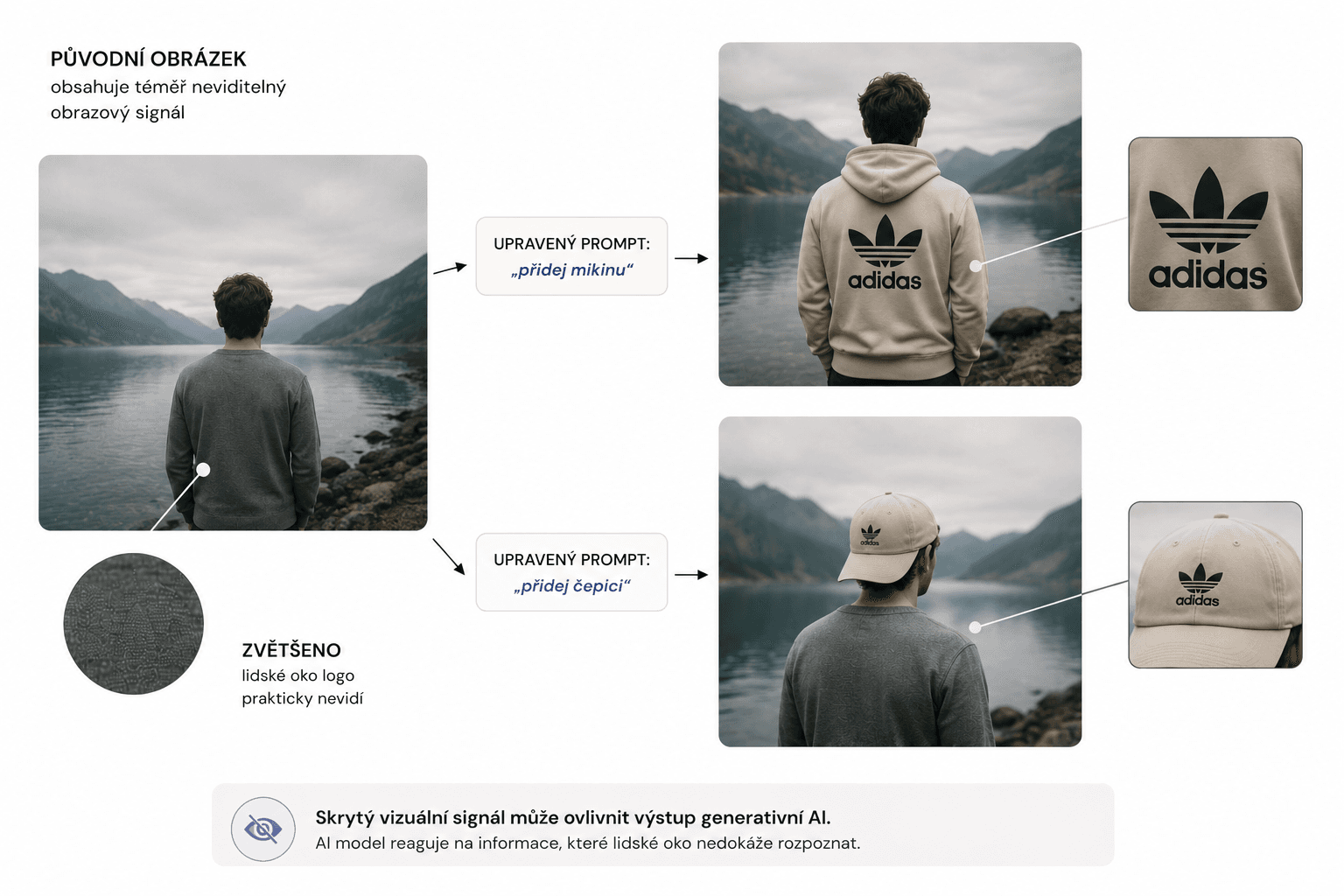
It turns out that generative models can respond to visual information that is virtually invisible to the human eye. So-called hidden logos are opening up a broader discussion about how well we actually understand the tools we use every day.
When a Logo Is Invisible
Most discussions about AI and trademarks focus on situations where a model accidentally generates a recognizable brand logo or a visual that closely resembles one. Hidden logos represent a different kind of issue.
It is possible to embed nearly invisible information into an image—information that cannot be detected by the human eye. Another AI model, however, may be able to identify and use that information when generating a new image. As a result, branded elements may appear in the output even though the user never mentioned them in the prompt.
This is not necessarily an everyday risk. Rather, it serves as a reminder that generative AI does not operate solely on what humans can see. The final output may be influenced in ways that are not immediately apparent.
What This Means for Brands
Hidden logos are not the main issue in themselves. What makes them interesting is what they reveal about how generative AI works. The final image may be shaped not only by a text prompt but also by visual information that users cannot recognize or interpret.
For brands, this means AI-generated content should not automatically be considered safe or entirely original. If a visual contains elements that resemble an existing trademark, it may affect:
- brand consistency,
- communication credibility,
- intellectual property protection,
- the registration of new logos and visual identities.
Questions surrounding copyright and trademarks have accompanied AI from the beginning. The more important a visual is to a company’s identity, the more carefully it should be reviewed before use.
Managing Digital Assets in the Age of AI
As the volume of AI-generated content grows, so does the importance of digital asset management. Companies need to know where content comes from, who created it, and whether it has gone through an approval process.
This is important not only for branding purposes but also when addressing potential legal or reputational issues. When organizations manage dozens of versions of the same visual asset, the value of traceability and clearly defined processes quickly becomes apparent.
BrandCloud enables centralized digital asset management and helps organizations maintain control over content across teams and external partners. In an environment where more and more materials are created with AI, visibility into content origins is becoming an essential part of brand governance.
Practical Implications and Recommendations
Hidden logos highlight an important reality: even high-quality AI-generated content is not entirely risk-free. That is why it is worth establishing a few basic guidelines:
- review final visuals before publication,
- check for logos, trademarks, and other branded elements,
- keep records of content origins,
- establish approval workflows for important assets,
- involve human review for materials closely tied to the brand.
Organizations that combine the speed of AI with strong digital asset management gain greater confidence in the content they use and in how it represents their brand.
Brand Trust Does Not Happen Automatically
Hidden logos demonstrate that generative AI is not a completely transparent technology. As more content is created through automation, understanding where it comes from and how it was produced becomes increasingly important.
The companies that benefit most from AI will not necessarily be those producing the highest volume of content. They will be the ones that maintain control over what their brand publishes and how that content reflects their identity.