
Firefox is one of those brands whose visual identity has long been deeply embedded in users’ minds. That is precisely why any change to its logo or interface attracts increased attention. The current redesign, referred to as Project Nova, raises the question of whether this is a fundamental transformation or rather a gradual evolution responding to shifts in the digital environment.
At the same time, the changes do not concern only the symbol itself, but the broader brand ecosystem. This is important to consider, as a logo no longer exists in isolation. It is part of a wider system that includes the product, communication, and user experience.
Firefox without the fox? Symbol or shorthand of identity
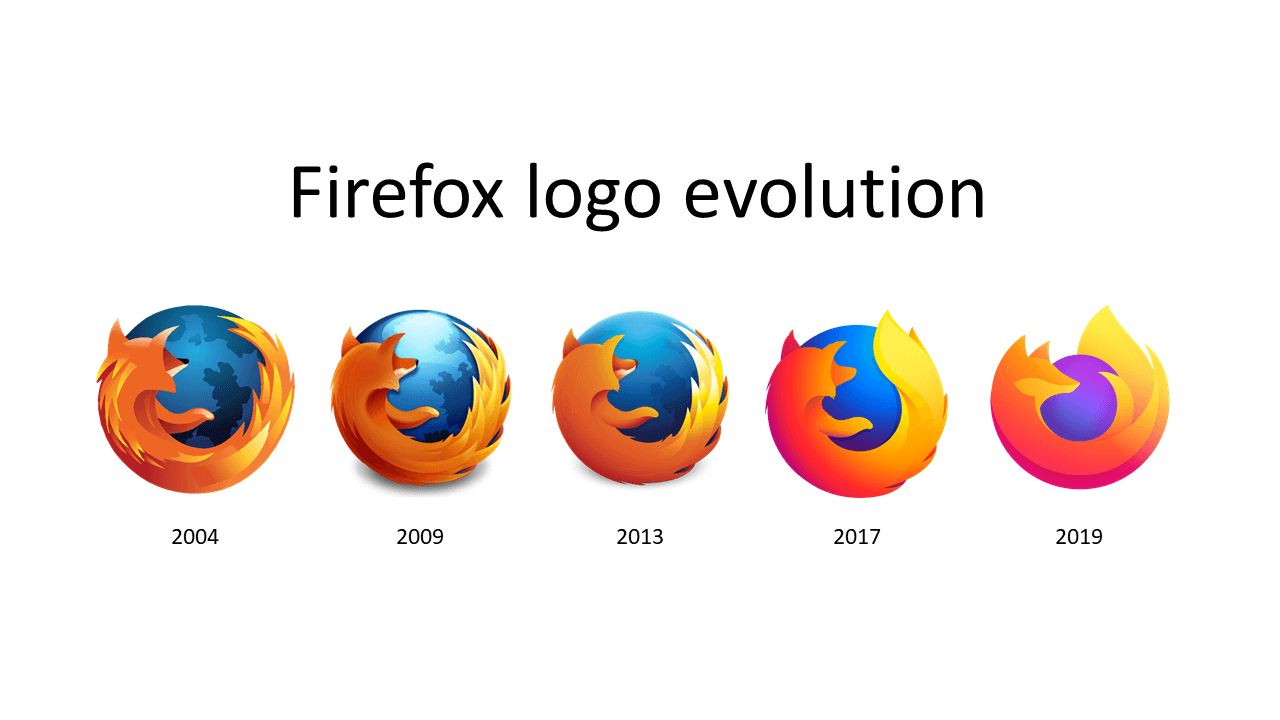
One of the most discussed aspects is the idea of a logo without the traditional fox. At first glance, this may seem like a radical step, since the fox has long served as the main carrier of the brand’s identity.

Source: Mozilla
In reality, however, this is not necessarily about abandoning the symbol entirely, but rather transforming it. Modern branding often works with reducing detail and simplifying shapes. The reasoning is practical. A brand must function across different sizes, devices, and contexts.
The question, therefore, is not simply whether the fox will remain or disappear. What matters more is how the brand maintains recognizability even with a higher level of abstraction. The ability to simplify a visual language without losing identity is one of the defining principles of contemporary design.
Project Nova and the transformation of the user interface
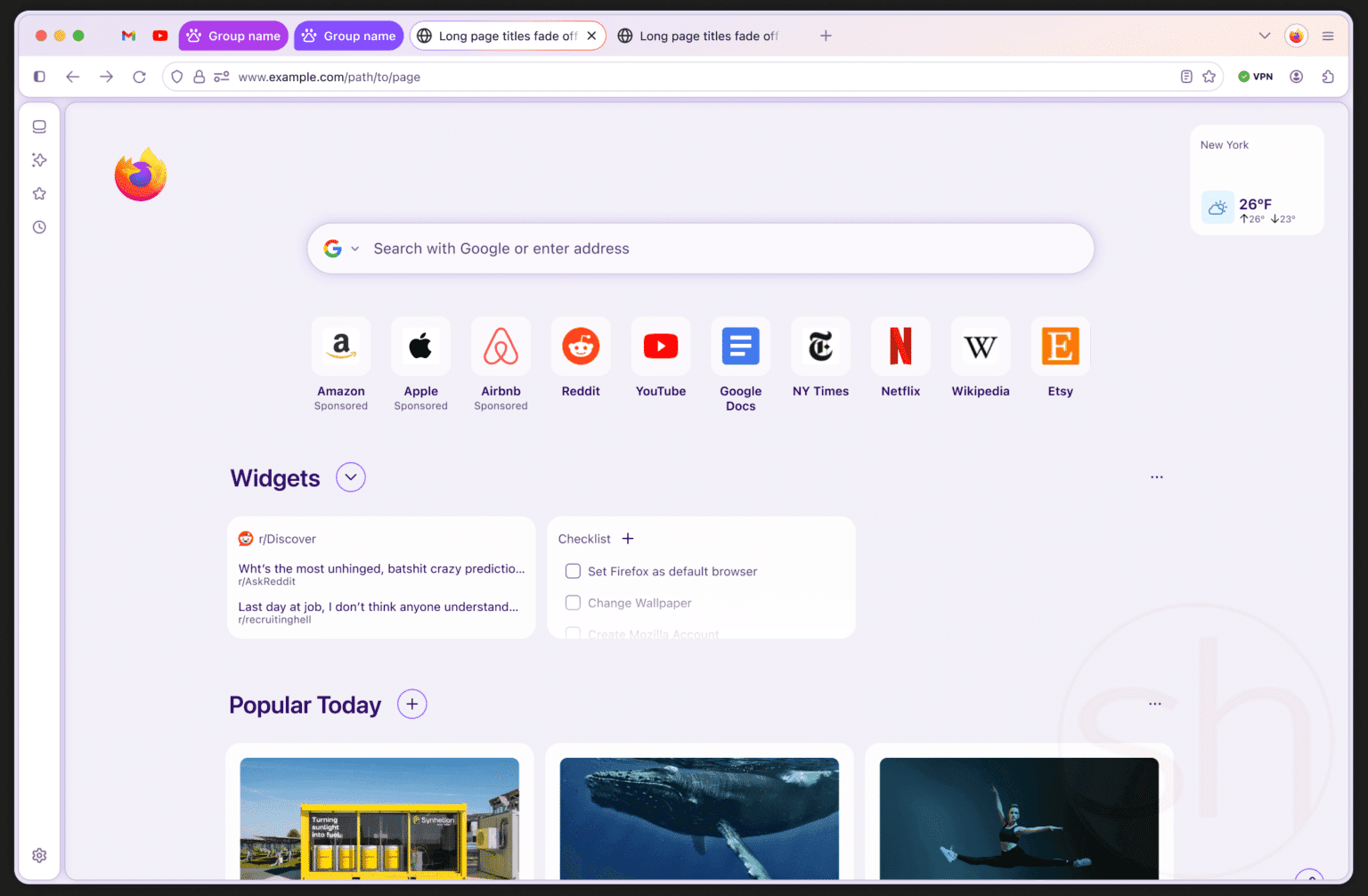
The Firefox redesign is not limited to visual identity. Project Nova represents a broader shift in the product environment. The updates primarily focus on interface structure, tab management, and overall clarity.
Source: Söeren Hentzschel
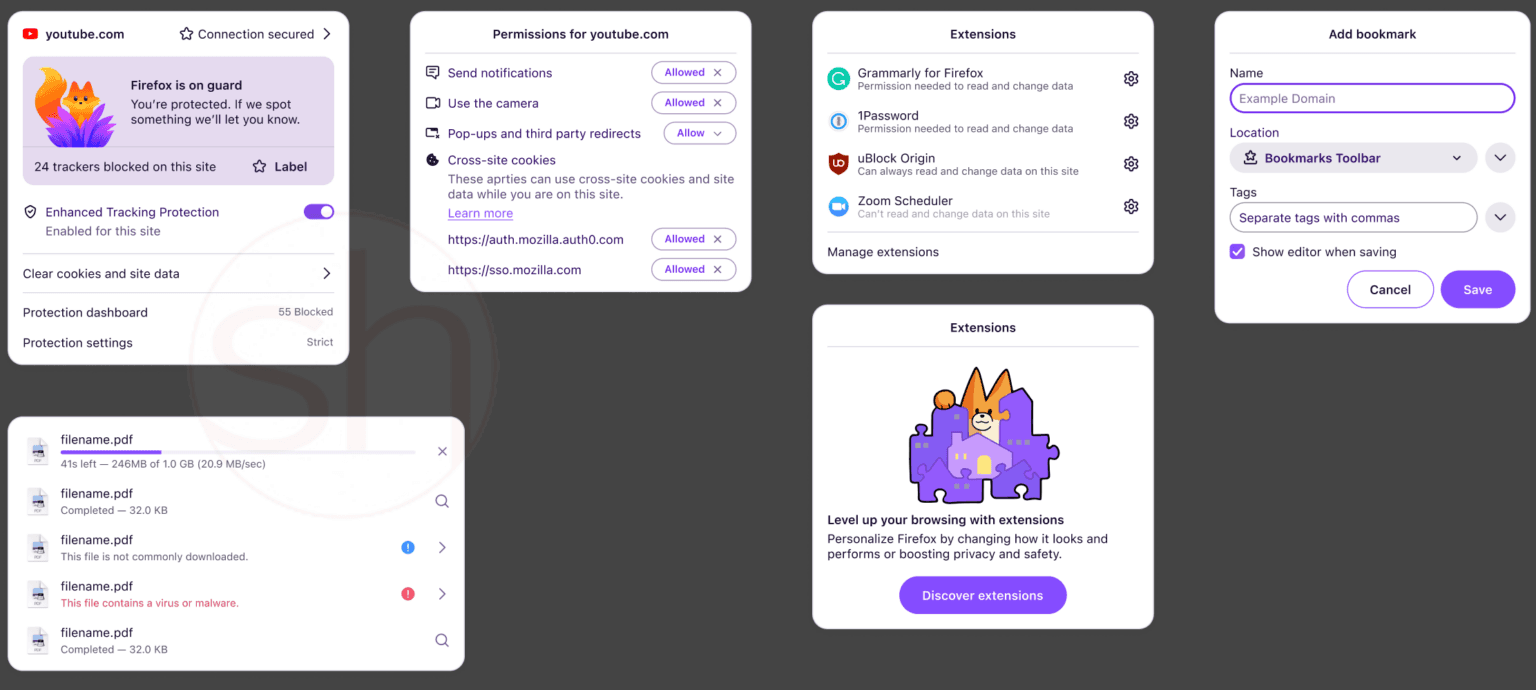
The aim is to create an environment that meets current expectations for speed and orientation. There is a stronger emphasis on modularity, meaning the interface is divided into simpler, more flexible components. For users, this results in easier navigation across multiple open pages and better control over content.
From a branding perspective, it is important that the visual style and the product environment are becoming increasingly interconnected. Design is no longer just an aesthetic layer. It is directly tied to how the product works and how it is perceived by users.
Source: Söeren Hentzschel
Evolution rather than revolution in digital branding
Looking at Firefox’s changes, it becomes clear that this is not a one-time shift. Instead, it reflects a continuous development that unfolds in multiple stages. This approach is common in today’s environment.
Brands are aware that a radical change can disrupt user trust. A gradual evolution allows them to maintain continuity while responding to new demands. In Firefox’s case, this can be seen in the handling of color, shapes, and overall visual expression.
Simplification, greater flexibility, and adaptability are trends visible across many technology brands. Firefox does not stand apart, but rather aligns with a broader direction in digital design.
How to read a redesign in a broader context
When evaluating a redesign, it is useful to consider multiple layers at once. It is not only about how the logo looks, but how it functions in practice.
It is worth asking questions such as:
- How is the change reflected in the product itself?
- Is the visual language consistent across channels?
- Can the brand communicate clearly even in a simplified form?
This is where the value of a systematic approach to branding becomes evident. BrandCloud helps maintain visual identity consistency across teams and outputs. In an environment where design is constantly evolving, it is essential to keep control over how individual elements are used.
What the Firefox redesign reveals about contemporary branding
The Firefox redesign shows that contemporary branding is moving toward greater flexibility and stronger integration with the product. A logo is no longer a static symbol, but part of a broader system that adapts to different contexts of use.
For brands, this means thinking about identity in a more comprehensive way. Creating a visually appealing logo is no longer sufficient. It must function across various situations and remain sustainable over time.
From a practical perspective, this confirms that a well-managed visual identity is built on a combination of clearly defined principles and the ability to adapt. Firefox provides a clear example of how changes can be implemented gradually, with respect for the past and consideration for the brand’s future direction.