
The Artemis program has returned to the spotlight in recent years. Most recently, it drew attention with the Artemis II mission, during which a crew flew around the Moon and safely returned to Earth. This marked the first crewed mission within the Artemis program and a return of humans to the vicinity of the Moon after more than 50 years since the Apollo program.
A major milestone.
With this, NASA demonstrated that returning to the Moon is no longer a distant vision, but a concrete plan. This phase is now followed by further steps, including a planned landing on the lunar surface. This time, however, it is not about a one-time achievement. Artemis is designed as a long-term program aimed at establishing a sustained human presence on the Moon and preparing the path toward Mars.
It is in this context that the brand emerges. When communicating a return to the Moon after more than half a century, technical precision alone is not enough. What is needed is a clear visual language that is understandable and memorable across different environments. In the case of Artemis, NASA has executed this exceptionally well.
What the Artemis Mission Actually Is
The Artemis program builds on the historic Apollo missions, which first brought humans to the Moon in the 1960s and 1970s. At that time, the primary goal was to reach the destination and demonstrate technological superiority. Artemis introduces a different approach. Its objective is long-term presence, research, and the gradual development of infrastructure that enables further exploration.
This shift is also fundamental from a communication perspective. It is no longer just about a technical accomplishment, but about a long-term project that must be understandable beyond the expert community. In practice, this is where branding becomes significantly more important than before.
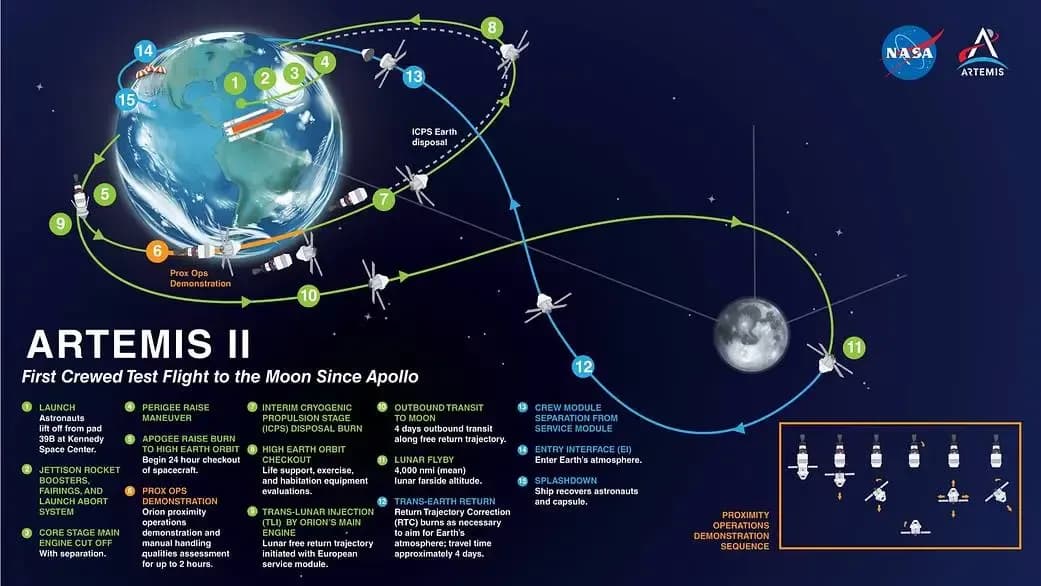
Source: NASA
Artemis and Apollo as a Story from Greek Mythology
The name Artemis is not accidental. In Greek mythology, Artemis was the goddess of the Moon and the twin sister of Apollo. NASA deliberately uses this relationship to create a natural connection between the past and the present.
The Apollo program opened the path to the Moon, and Artemis continues and extends this story. This symbolic layer gives the brand a depth that goes beyond the project itself. As a result, the brand does not function merely as a technical label, but as part of a broader narrative.
This is how it should look. The name and visual identity should be rooted in a single, consistent story that is understandable without complex explanation.
How the NASA Artemis Logo Was Created
At first glance, the Artemis logo appears simple, but in reality it is highly structured and intentional. Its dominant element is a stylized letter “A” with a sharp, geometric form that evokes upward movement.
The left side of the letter is formed by a subtle curve resembling a crescent Moon. The right side is defined by a bold diagonal line, representing a flight trajectory that connects different points in space. Near this line, a small dot appears, symbolizing Earth.
.svg.png&w=3840&q=75)
Source: Wikipedia
Together, these elements create a clear and simplified relationship between Earth, the Moon, and the journey connecting them. In terms of color, the logo primarily uses a red tone that NASA has long incorporated into its visual identity, ensuring strong visibility across digital environments.
This level of specificity is what makes the logo effective. It is not abstract. Each element carries meaning, and together they form a visual that can be quickly associated with the entire program.
Comparison with Apollo Mission Logos
Apollo mission logos represent a very different approach. Each mission had its own emblem, often containing text, stars, orbital paths, and other symbolic elements. These designs functioned as identification patches and reflected the unique character of each mission.
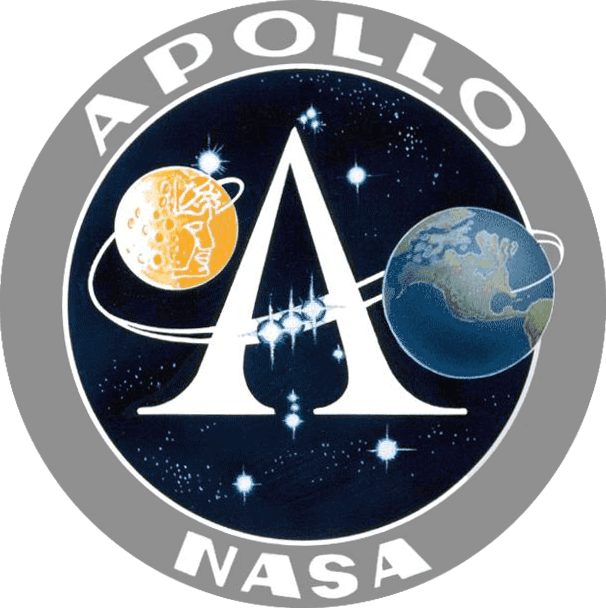
Source: Wikipedia
Artemis, by contrast, relies on a single, consistent symbol used across the entire program. Instead of variability, it brings stability. Instead of detail, it offers reduction.
In the past, it was important to explain and describe. Today, what matters is immediate clarity and fast recognition. Overly controlled branding can reduce trust, while the absence of a clear system leads to inconsistency. Artemis finds a balance between these two approaches.
Why the Logo Works Today
Modern brands exist primarily in digital environments, where space is limited and attention spans are short. A logo must work instantly, without requiring interpretation.
The NASA Artemis logo is designed to perform in all these contexts. It is clear, simple, and easily recognizable even at small sizes. This is what defines its functionality today.
The success of a brand is not demonstrated in the design itself, but in how it performs in everyday use. If a logo cannot function in real-world conditions, its concept loses relevance.
What to Take Away from the Artemis Logo
Strong branding today is not about adding elements, but about removing them. Artemis is a compelling example of this approach.
The future of branding is moving toward greater clarity and a stronger emphasis on meaning. Brands that want to succeed must be immediately understandable while remaining flexible across different channels.
This is where tools that ensure consistency become essential. BrandCloud enables teams to manage visual identity systematically and maintain a unified brand, regardless of who is working with it.