Typography is one of the most visible elements of any communication, yet its basic terminology is often used imprecisely. The difference between a font and a typeface is commonly confused, even in environments where design is part of everyday work. At first glance, it may seem like an insignificant detail. It isn’t.
Unclear terminology often leads to superficial decisions and inconsistent outputs. Once these concepts are properly understood, the way typography is approached begins to change. It stops being about random font selection. It becomes a system.
What is a typeface and what is a font
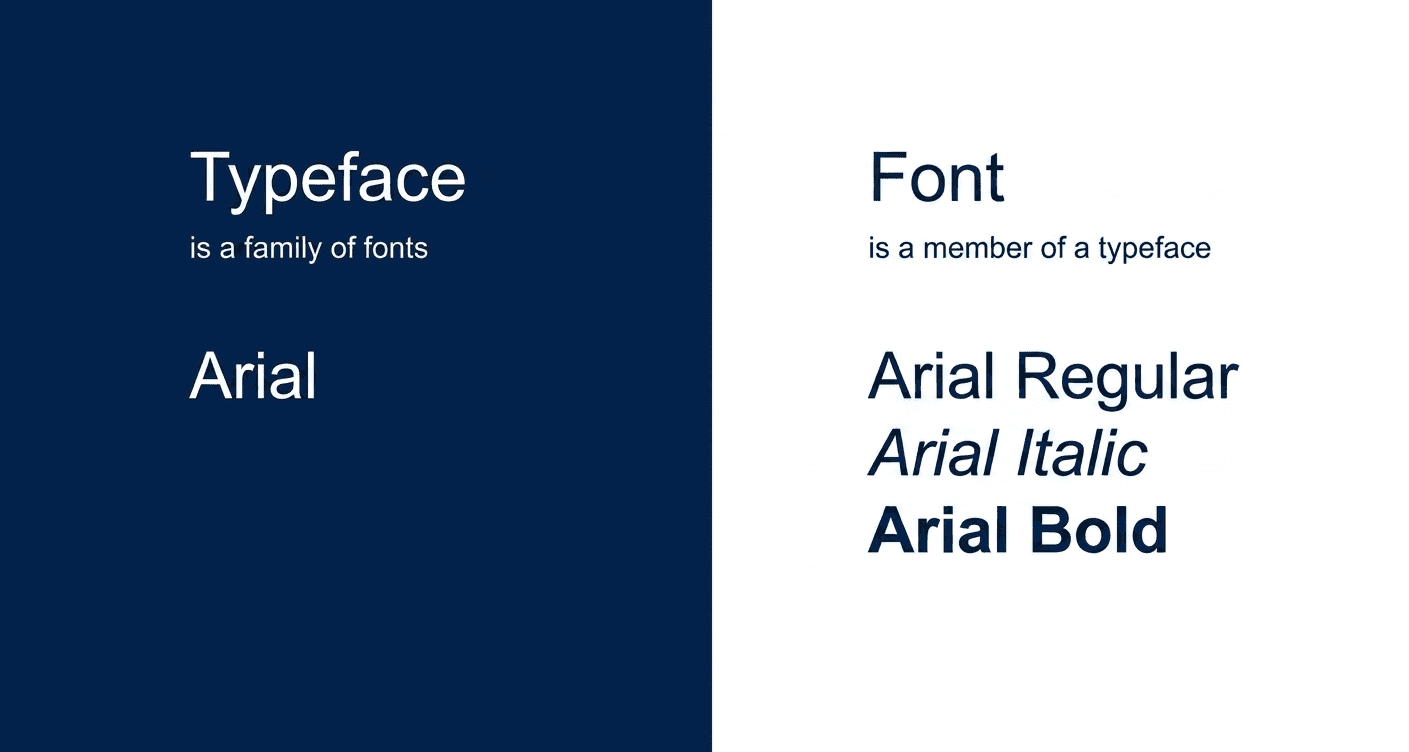
A typeface refers to the overall design of a set of characters, a visual system defined by a consistent style, proportions, and character. It represents a collection of variations that share a common foundation and form a unified typographic family.
A font, on the other hand, is a specific instance of that design, defined by attributes such as weight, size, or style. While a typeface represents the concept, a font is its concrete implementation in a given context.
The difference is simple. But fundamental.
When typography is considered at the level of a typeface, the approach becomes more systematic and controlled. Otherwise, typography tends to be handled inconsistently, often based on immediate needs, without any connection to a broader system.
The history and origin of the terms
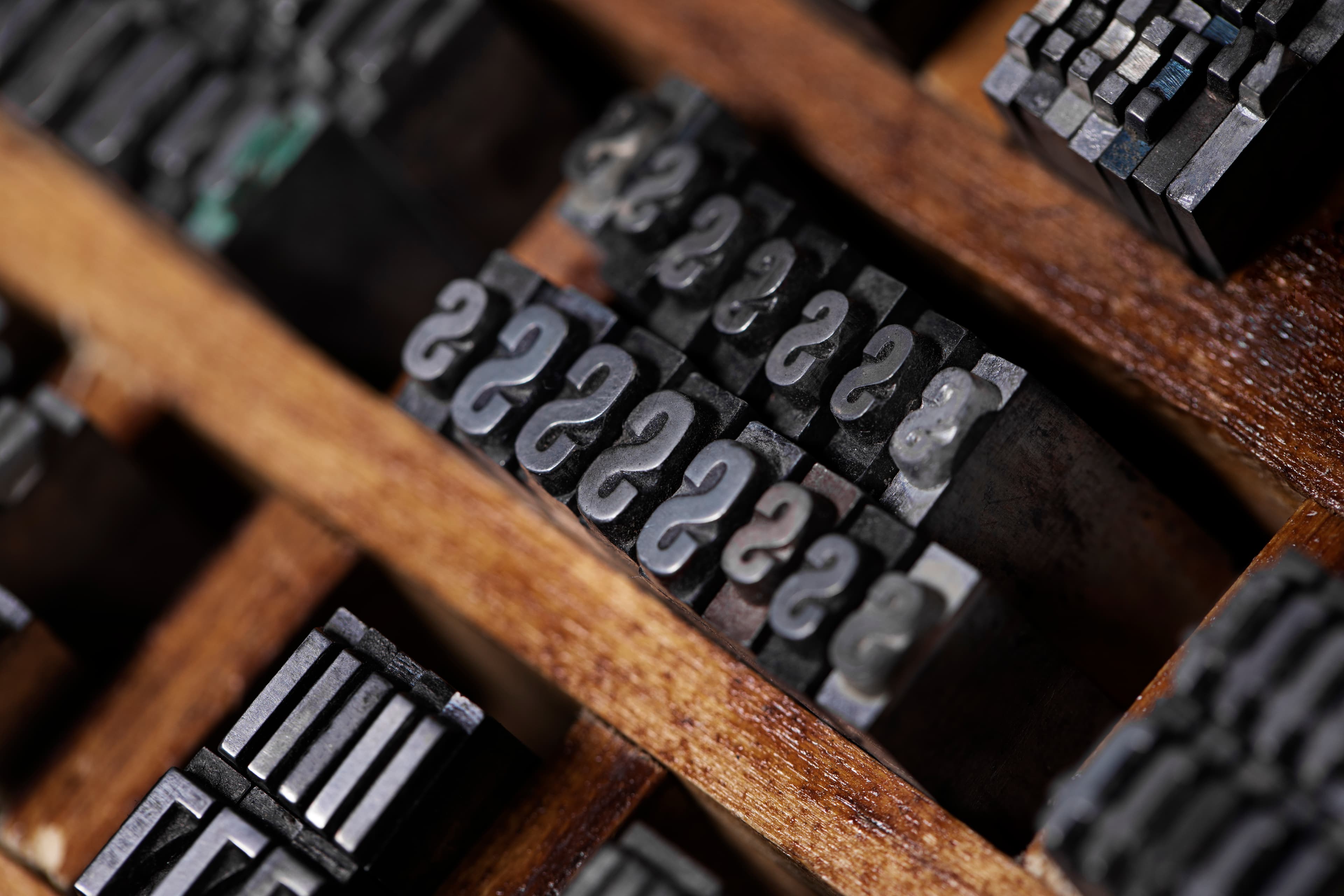
The distinction between a font and a typeface originates in the era of print, when typography was based on physical metal typesetting. The word “font” itself comes from the Middle French word “fonte,” meaning the casting of metal. Individual sets of metal characters were cast as complete units, forming a font.
Fonts that shared the same visual design belonged to a single typeface. In printing workshops, characters were stored in two separate cases, one for uppercase and one for lowercase letters, which is where these terms originate. Text was assembled manually, character by character, then inked and pressed onto paper.
Every step was physical. Every decision had a tangible form.
With the advent of digital typesetting, much of this terminology remained, but its meaning began to shift. In a digital environment, a single font file contains all the data needed for an entire typeface, including the ability to scale it instantly. Technically speaking, the original distinction no longer exists in the same way it did in traditional typesetting.¨
The context has changed. The terms have remained.
Today’s use of the word “font” is largely influenced by text editors and design tools, which rely on a “font menu.” This menu displays entire typeface families, while specific attributes are adjusted afterward. This way of working has contributed to the blending of the two terms and the simplification of their meaning.
Why terminology matters
Even though digital tools tend to blur the distinction between fonts and typefaces, the importance of this difference remains. When terminology is not used correctly, typography is treated as a series of isolated choices rather than as a cohesive system.
This approach often leads to inconsistent outputs and weakens the visual identity of communication. Each piece of text may appear different because it is not connected to a unified foundation. Typography then loses its function as a tool that supports the message.
The correct approach is to first define the typeface, the character of the typography, and only then determine the specific fonts and their usage. This allows for a consistent visual language while still accommodating different contexts.
How typography influences perception
Typography has a direct impact on how a message is perceived and interpreted. Each typeface carries a certain tone that shapes the overall impression, while individual fonts bring that tone into specific situations.
If typography is not carefully considered, a mismatch emerges between content and form. Even well-written text can feel unclear or untrustworthy when presented with inappropriate typography.
Sometimes a small change is enough. And the meaning shifts.
A systematic approach helps prevent this. Typography should be treated as an integral part of communication, not as an afterthought.
How to work with the difference in practice
To use the distinction between fonts and typefaces effectively, typography should be approached in a structured and consistent way.
- Think of the typeface as the core decision that defines the character of communication
- Use fonts as specific tools for different contexts
- Maintain consistency across all outputs
- Test readability in different environments
- Limit the number of variations to keep communication clear
In team environments, the issue often lies not in the selection of typefaces, but in their usage. Guidelines exist, but they are not accessible or not followed. This is where a systematic solution can help. BrandCloud enables typography to be managed as part of a broader brand system, where not only typefaces are defined, but also the specific use of fonts across different contexts. This connects strategy with everyday execution.