A joint campaign or product brings together brands with their own visual identities. Their logos appear alongside one another on packaging, websites, and advertising materials. Co-branding guidelines help preserve the recognizability of each brand and clearly communicate their partnership.
What Is Co-branding?
Co-branding is a collaboration between two or more brands on a shared product, service, or communication. It allows them to combine their expertise and reach new audiences. The foundation is a shared goal and a clear benefit for the customer that explains why the brands have joined forces.
Simply placing logos next to each other does not explain this relationship. The material should make it clear whether it represents a joint product, a partnership, or event sponsorship.
IKEA and Sonos Combined Furniture Design with Sound
The collaboration between IKEA and Sonos resulted in the SYMFONISK range, which combined home furnishings with speakers. Products included table lamps and picture frames with built-in speakers. IKEA contributed its expertise in home furnishings, while Sonos provided its audio technology.
This example shows how co-branding can offer a clear contribution from both partners. Joint branding helps customers identify who is behind the product and what expertise it brings together.
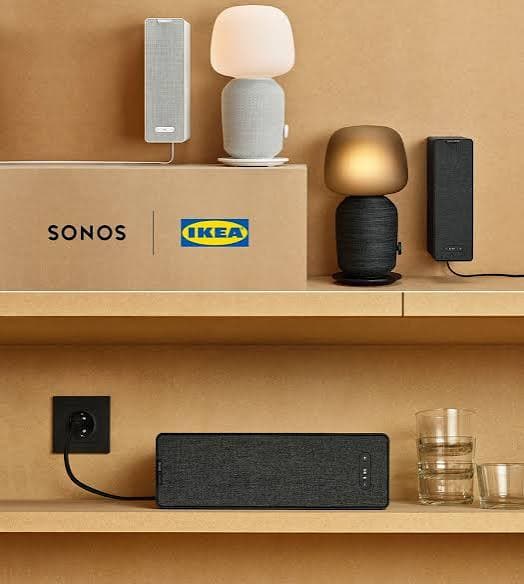
Source: IKEA
How to Combine Partner Logos
The first step is to define the roles of the brands. An equal partnership requires a different arrangement from an event with one main organizer and several sponsors. The order and prominence of the logos should reflect this relationship.
The following rules are important when preparing the design:
- Visual size – in an equal partnership, the logos should appear similarly prominent. Using the same width or height does not necessarily ensure this.
- Clear space – each logo must retain the clear space specified in its brand guidelines.
- Legibility – the arrangement must respect the minimum sizes of the logos and remain effective in smaller formats.
- Approved versions – colors, proportions, and individual elements of the logos must not be altered arbitrarily.
- Placement – the order, alignment, and spacing should be defined in advance and applied consistently.
There is no universal ratio for logo sizes or spacing. The partners’ brand guidelines and the approved joint arrangement are the deciding factors.
From Agreement to an Approved Template
Before creating any materials, it should be clear which brand will lead the visual style, who will provide the assets, and who will approve the final outputs. Agreed expectations and ongoing communication help prevent disputes and last-minute corrections.
BrandCloud makes it possible to prepare a dedicated set of assets for a specific partnership, including logos, rules for combining them, and approved templates. Designers therefore receive materials prepared specifically for the collaboration, together with guidance on how the brands should be presented alongside each other.
Sharing, permissions, and version control make it possible to manage access to this asset set and update it when changes occur. In practice, this means that every new banner or presentation can follow the agreed solution, without having to redesign the logo arrangement each time.

One Partnership, Consistent Outputs
An approved logo arrangement needs variants for different formats. A narrow mobile banner may require a different layout from a wide printed material. Simply scaling down all logos often results in poor legibility.
Well-defined co-branding preserves the identities of the partners and communicates their relationship consistently across formats. Shared guidelines and prepared templates give the partnership a reusable visual form.