
Just a year ago, most companies were using AI primarily to generate text, create images, or search for information. The next step in this evolution is AI agents. Instead of responding to a single prompt, they are assigned a specific objective. They plan the required steps, execute multiple actions, and work with available data while following predefined rules.
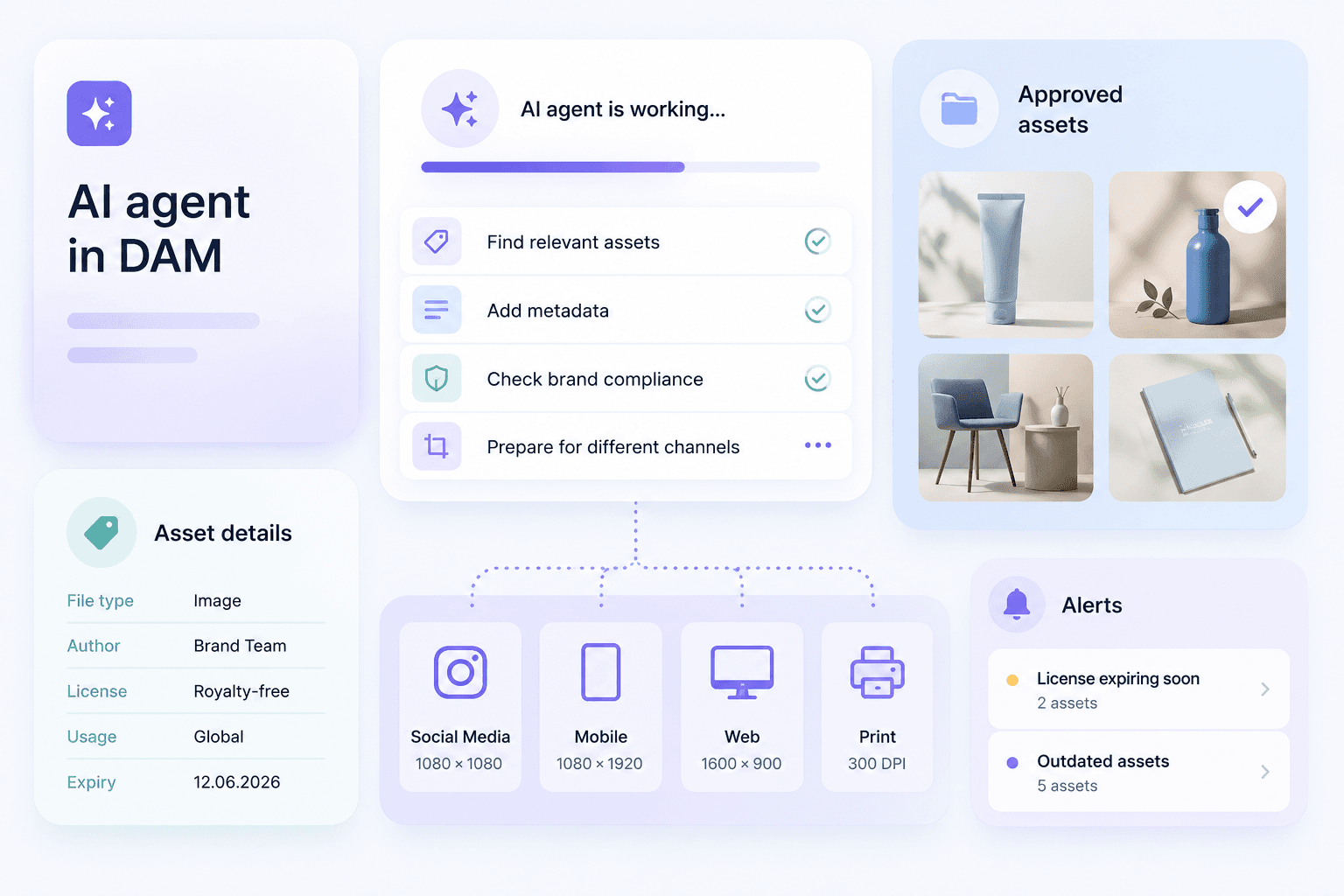
In a Digital Asset Management (DAM) environment, this represents a major shift. An AI agent does much more than simply locate the right file. It can enrich metadata, verify compliance with brand guidelines, prepare assets for different communication channels, or alert users when licenses are about to expire. As a result, DAM is evolving from a storage solution into an intelligent assistant that saves time and simplifies the daily work of marketing teams.
An AI Agent Is More Than a Smarter Chatbot
The term AI agent has become increasingly common over the past few months, yet it is often confused with traditional AI assistants. The difference is significant. A chatbot answers individual questions, while an AI agent works toward a defined goal. It can plan a sequence of actions, evaluate results, and adjust its approach whenever necessary.
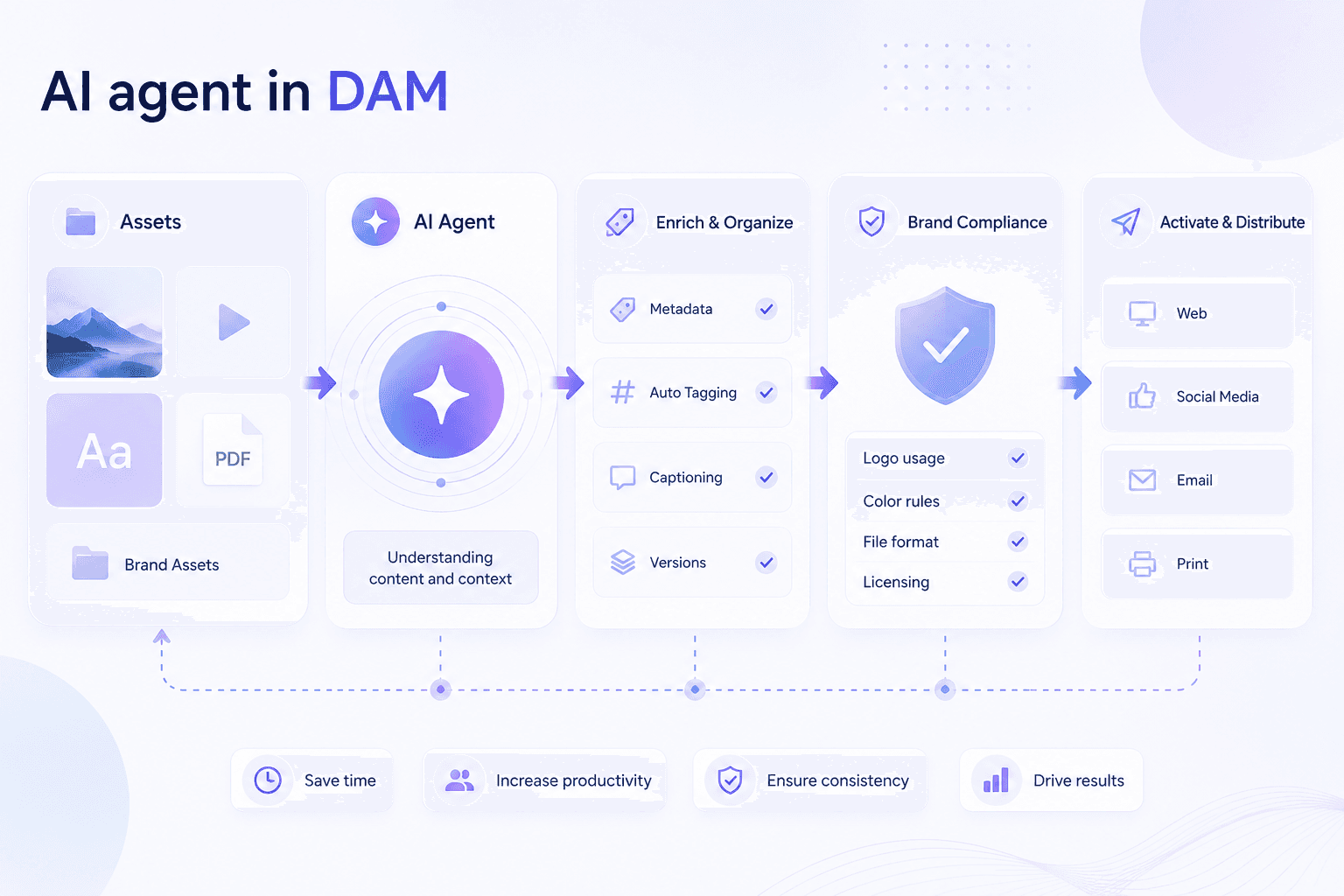
Within a DAM system, an AI agent doesn't need instructions for every step. It can identify the right assets for a new campaign, verify that they are up to date, check licensing requirements, generate the required formats, and deliver them to other systems or team members. Rather than directing every individual task, users simply define the desired outcome.
This ability to execute complete workflows is what distinguishes AI agents from earlier AI-powered features.
Why AI Needs DAM
The effectiveness of AI depends entirely on the quality of the data it can access. Without sufficient knowledge about a company's brand, products, or content governance rules, its decisions are likely to be inaccurate.
A DAM platform provides the context AI needs. It stores digital assets alongside metadata, version history, licensing information, user permissions, and the overall structure of the content library. This allows AI agents to understand not only what an asset is, but also how it should be used, who can access it, and where it has already been published.
This is why AI and DAM are increasingly being discussed together. AI gains a structured environment that enables more informed decision-making, while DAM evolves beyond being a simple repository for digital files.
What AI Agents Can Do Inside a DAM
Many tasks involved in managing digital assets are repetitive. Searching for the correct version, maintaining metadata, preparing multiple file formats, or monitoring usage rights consumes valuable time for marketing teams.
AI agents can automate many of these activities. They can:
- generate and enrich metadata,
- recognize products, objects, or people in images,
- recommend the most suitable asset for a specific campaign,
- verify compliance with brand guidelines,
- prepare localized or multilingual content variations,
- notify teams about expiring licenses or outdated assets,
- automatically generate crops and formats for different marketing channels.
The benefits extend beyond time savings. Marketing teams gain confidence that they are always working with the latest approved assets and that the correct versions are being used consistently across the organization.
BrandCloud Enables Intelligent Digital Asset Management
AI agents can only perform effectively when they have access to well-organized, high-quality data. Without a consistent asset structure, reliable metadata, or clearly defined brand rules, they lack the context needed to make accurate decisions.
This is where modern DAM platforms become essential. BrandCloud centralizes digital assets, standardizes metadata management, and ensures that every team works with the same trusted information. This reduces duplicate files, eliminates version confusion, and helps maintain control over licensing and asset usage.
Equally important, BrandCloud connects content management with everyday marketing workflows. Instead of simply locating files, AI agents can work with verified data, respect brand governance, and automate tasks that would otherwise require manual effort.
As AI capabilities continue to evolve, the quality of the underlying data will become one of the biggest factors determining the value organizations can achieve from artificial intelligence.
The Future of DAM Is About More Than Storage
Digital Asset Management is evolving from a passive repository into an active system that supports the daily work of marketing teams. AI agents represent the next logical step in this transformation. Rather than simply retrieving content, they can execute complete workflows and streamline processes across the organization.
This does not mean AI will replace DAM. In fact, the opposite is true. The more capable AI agents become, the more important it will be to provide them with a structured environment in which they can operate. Well-managed digital assets, accurate metadata, and clearly defined brand governance will form the foundation of intelligent automation.
The future of digital asset management will not be driven by more powerful AI alone. It will depend on combining AI with a robust DAM platform that provides the context, trusted data, and governance AI agents need to make reliable decisions. That is the direction in which modern DAM solutions are rapidly evolving.