
Colors are one of the most powerful tools in visual communication. They shape how we perceive a brand, evoke emotions, and influence the overall impression of a design. But not all colors are created—or reproduced—equally. Ensuring that colors look exactly as intended starts with choosing the right color model, most commonly RGB, CMYK, or PANTONE.
Additive vs. Subtractive Color Models
A color model is a system that allows us to describe colors numerically and consistently. Most models combine three or four color components, but the key difference lies in how colors are created. This fundamental difference explains why colors on a screen never look exactly like their printed counterparts—they rely on opposite physical principles.
Additive Color Model – Creating Color with Light
In the additive model, colors are created by combining light. The more light you add, the brighter the color becomes. Mixing all components at full intensity produces white, while the absence of light produces black. RGB is the most common additive system, combining red, green, and blue light. Real-world examples include digital screens with LEDs: turning on all three colors creates white, while turning them off produces black.
Subtractive Color Model – Creating Color by Removing Light
The subtractive model works with pigments or inks that absorb light. It starts with a white surface, and color is created by layering pigments that subtract light until the desired shade appears. The more pigment added, the darker the color, because less light is reflected. CMYK—cyan, magenta, yellow, and black—is the most common subtractive model, with PANTONE used when exact color matching is required. In real-world terms, mixing many inks on white paper eventually produces black, while leaving the paper uncolored keeps it white.

Choosing the Right Color Model
When working on branding, print materials, or products, knowing where your colors will appear is essential.
RGB – Colors for Screens
The RGB model—Red, Green, Blue—uses light to create color, making it ideal for digital displays such as monitors, TVs, cameras, and scanners. The model’s roots go back to the 19th century when physicist James Clerk Maxwell created the first color photograph using three filters in 1861. Today, RGB remains the standard for digital design.
If you’re designing for web, social media, or video, RGB is your go-to. For print, however, colors must be converted to the subtractive CMYK model.

CMYK – Colors for Print
CMYK—Cyan, Magenta, Yellow, and Key (Black)—relies on subtractive mixing, gradually removing light from a white surface. Developed in the 1890s for color printing in newspapers, CMYK became standard with the rise of offset printing in the mid-20th century.
Today, it’s the most widely used model for printed materials such as catalogs, posters, packaging, and business cards. Any printer operates in CMYK, so converting RGB designs to CMYK is essential to ensure accurate color reproduction.

PANTONE – Precision When It Counts
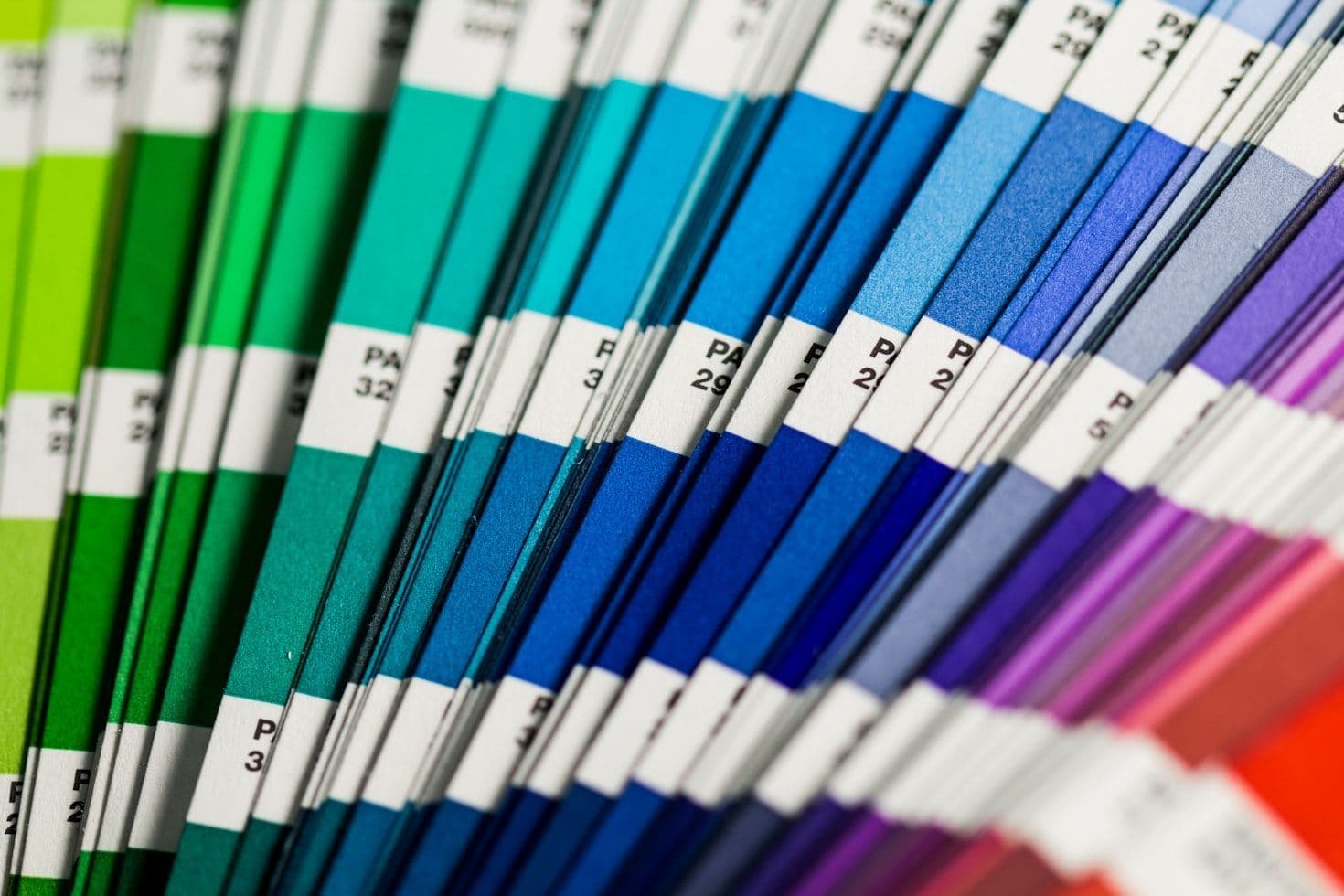
The PANTONE Matching System, introduced in 1962, standardizes colors to ensure consistency across different media and printing processes. Each PANTONE color has a unique code, allowing designers and manufacturers to reproduce colors precisely, regardless of device or material.
PANTONE is ideal when visual consistency is critical—branding, logos, packaging, fashion, promotional items, interior design, and industrial design. Unlike RGB or CMYK, PANTONE colors are defined by physical swatches rather than screens or printing processes, making it perfect for exact matches or vibrant shades that standard CMYK printing can’t achieve.
Keeping Colors Consistent with BrandCloud
In modern marketing and design, colors often travel between screens, print, and physical products. To maintain consistency, colors need to be stored, shared, and managed properly.
BrandCloud provides centralized control of your visual identity, including logos, images, videos, and color specifications. Designers, printers, and marketing teams can access the most accurate and up-to-date color assets—whether RGB, CMYK, or PANTONE.
With BrandCloud, brands can maintain color consistency across all channels—from digital platforms to physical products.